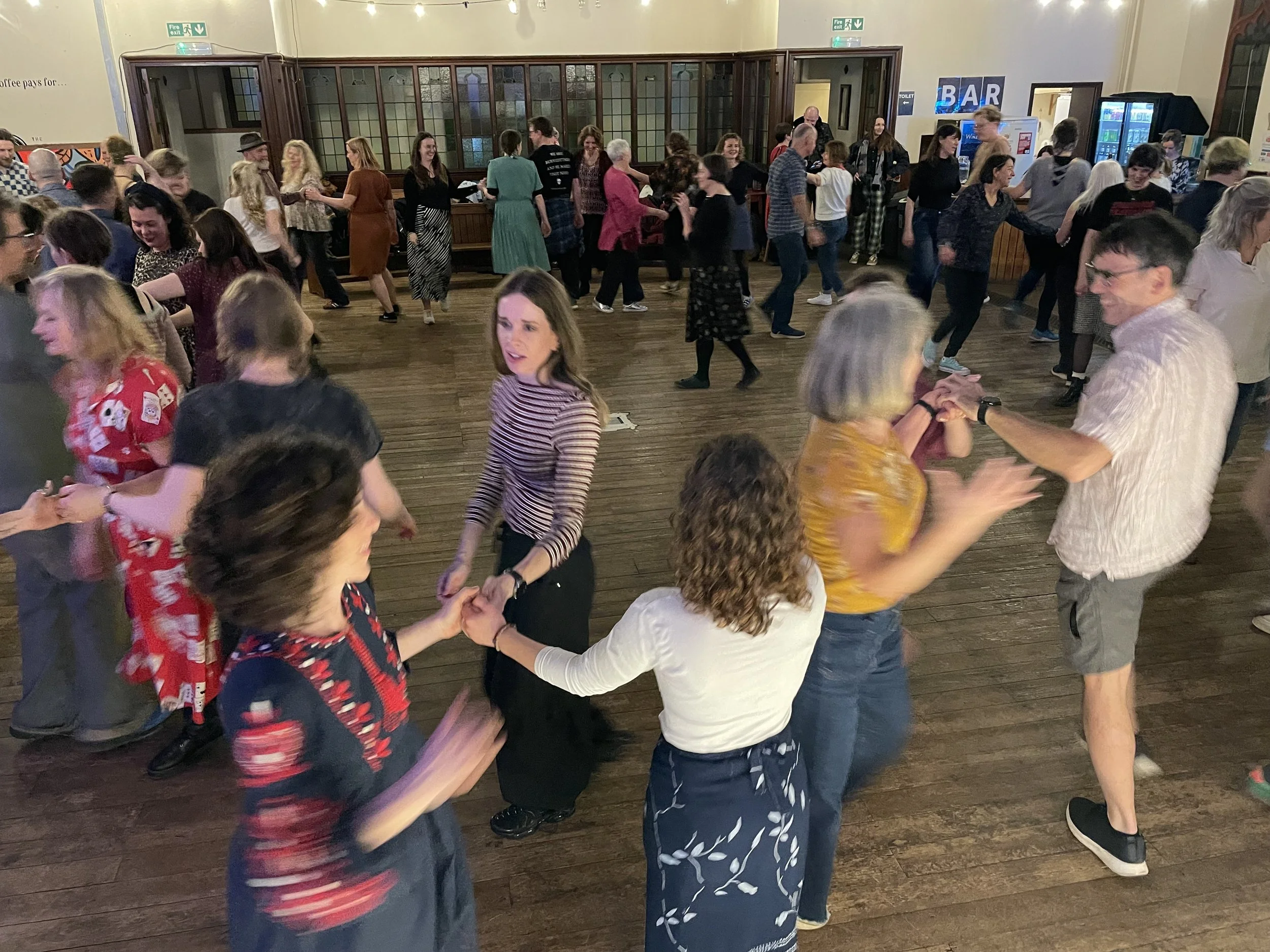
Calling for Social Folk Dance
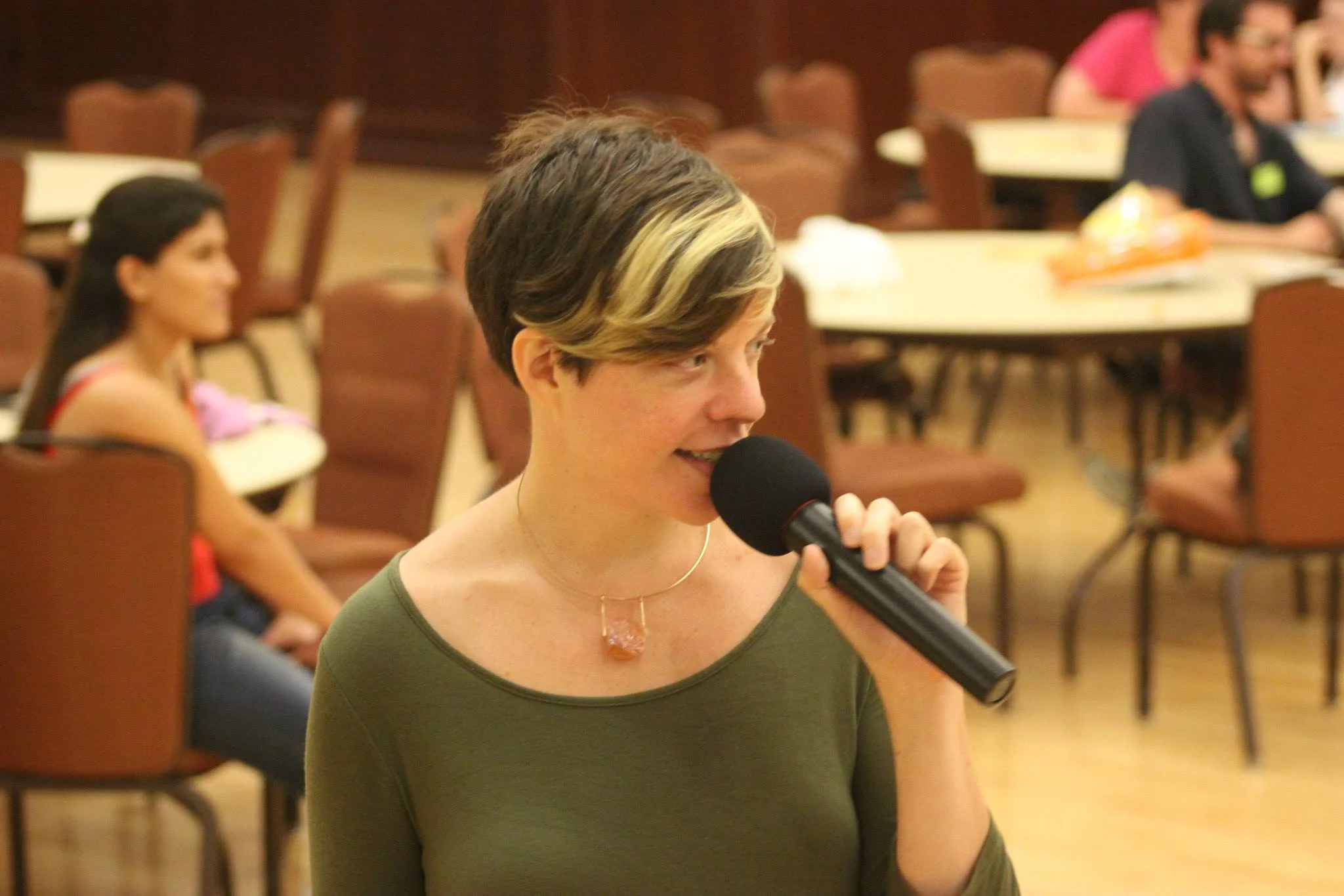
I am a versatile contra, ceilidh, and English country dance caller, equally at home teaching a room full of new dancers and running a specialist historical workshop at a festival.
As an historian, teacher, and caller of traditional social folk dances and related forms from the seventeenth century through to today, I enjoy creating a dance experience and atmosphere that is welcoming, fun, and at an appropriate skill level for the dancers present.
My stage presence is low-key and lighthearted.
I am known for my explorations of queer- and non-binary experiences in folk dancing, both as an historian and as one of the pioneers of role- and gender-free teaching and calling in social folk dance.
I believe that one of the greatest strengths of traditional dance is its adaptability and responsiveness to the needs of those dancing. I favour descriptive terms over jargon, and since 2017, I have primarily been using positional calling (without role terms, gendered or otherwise), and although I will sometimes defer to organisers, I prioritise bookings that request or require gender-free calling.
Contra Dance
Contra dancing is American-style social folk dance.
I call contra dances regularly across the UK and beyond, for crowds that range in experience from almost entirely new to seasoned contra dancers.
My favorite contra dances have great flow combined with unexpected transitions between familiar figures; I love diverse formations and I strive for variety in my dance programs.
My calling style is upbeat and focused on the belief that fun is success, and vice versa.
See examples of my calling on Youtube.
"Thank you for the fantastic contra dance calling Saturday night.
You called some new dances - they were fun, challenging and fresh."
- dancer, Oklahoma City
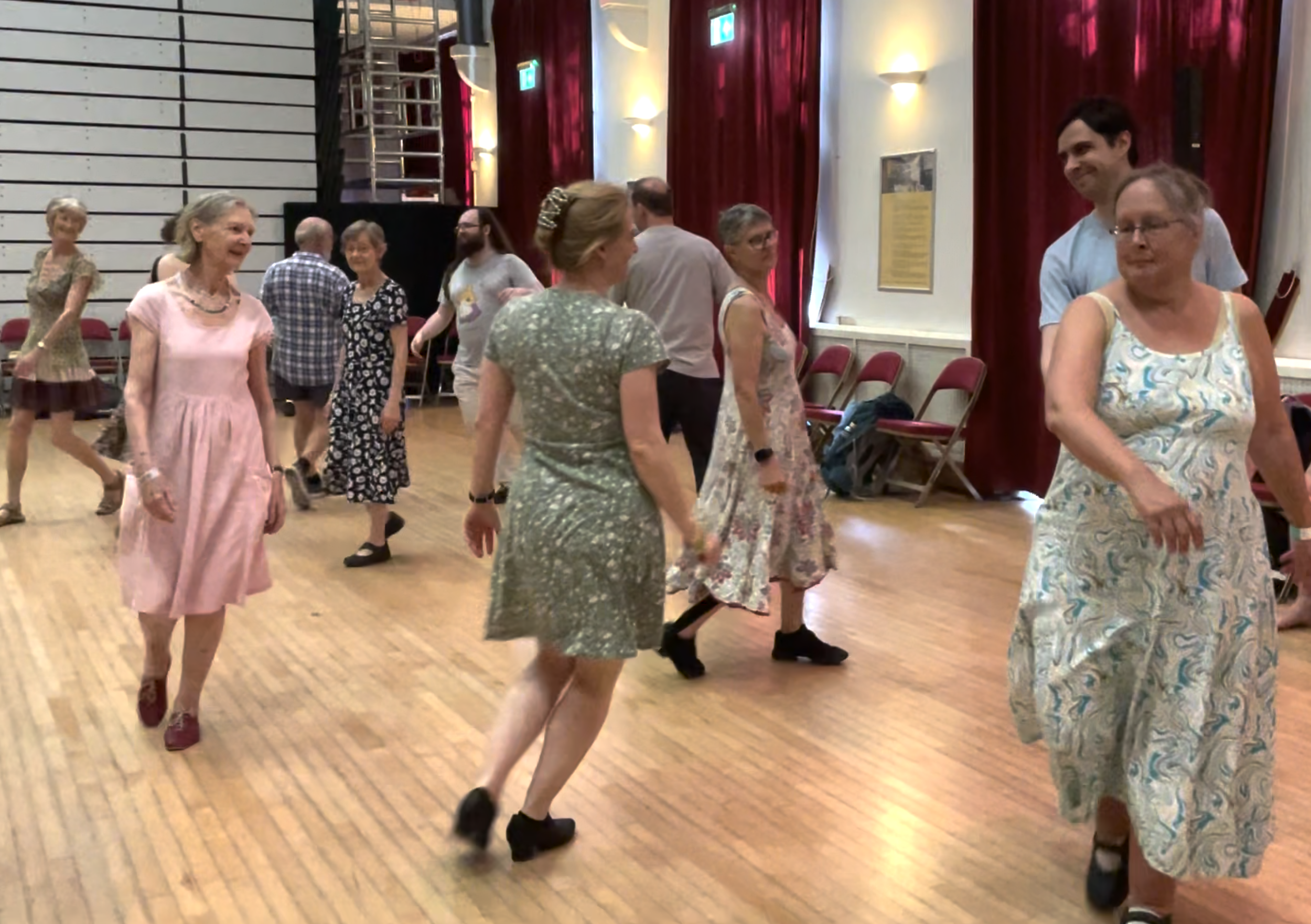
English Country Dance
English country dancing is the living tradition that began (in some sense) with John Playford’s publication, The Dancing Master, in 1651.
I call English country dances regularly around the country and abroad. In addition to regular dances, I've called for festivals, dance weekends, school and social groups, the Jane Austen Society of North America, house parties, and more.
I call both modern and historic dances in a variety of formations, and I especially enjoy dances that encourage dancers to fill the musical phrase.
You can watch me calling English dances on Youtube.
“I appreciated that your session for which I played was attractive to younger dancers and a more diverse group.”
-musician, Wiltshire
“One of our members actually said to me during the dancing that although she had done that sort of dancing before no one had explained it as clearly as you and that she finally understood!”
-organizer, northwest London
Ceilidh dance
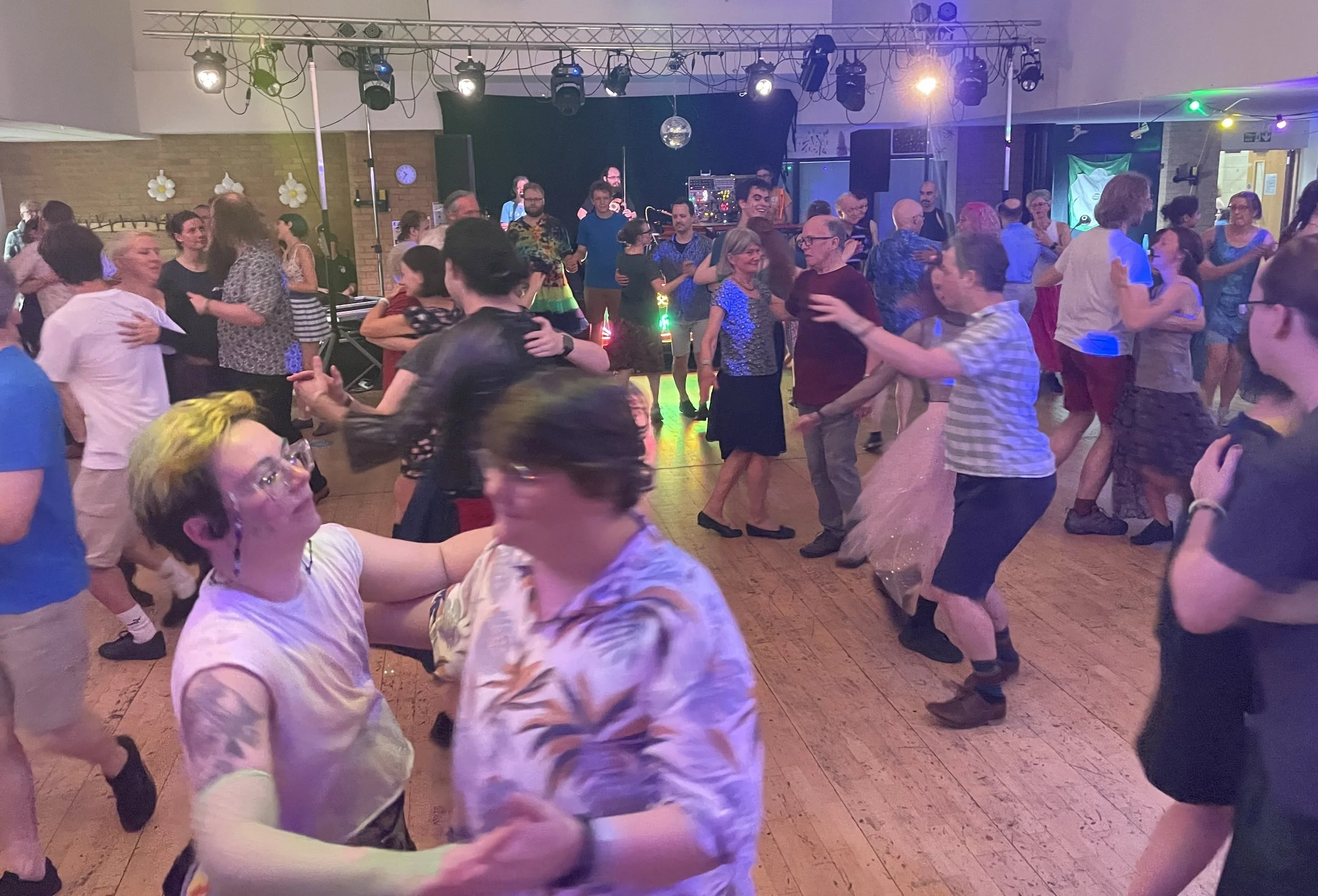
After years of calling barn dances in the US, I transitioned to calling English ceilidhs when I moved back to the UK in 2021. No matter what you call it, it’s all-ages, no-experience-necessary fun!
In 2021 fiddle player Linda Game and I received a mini-grant from the English Folk Dance and Song Society to create Brighton Gender-Free Contra+. When we moved to Winchester, we transitioned that funding to WinQeilidh -- Winchester's in-town queer ceilidh series. WinQ dances are approximately once a month during term-time.
Drawing on English, Irish, Scottish, and American traditions, I call accessible, entertaining dances for private functions and public ceilidhs with the Brighton Ceilidh Collective, Electric Hoedown, and others.
"Thanks to the musicians and caller (Louise) that came to play for us. They were absolutely fantastic and did a perfect job. The evening achieved exactly what we had hoped - all age fun with great music and good clear instruction so everybody felt able to get involved."
-party host, Sussex