Printmaking
A series of collagraphs from my Dancing Queer History project.
Although John Playford didn’t include diagrams in The Dancing Master, many other choreographers and publishers attempted to translate dance instructions into visual forms. The most enduring strategy is known as Beauchamp-Feuillet notation, which used lines to indicate the dancer’s path, and symbols along the line to indicate their footwork. In these prints, I use a looser line and my own memory of dancing to create diagrams that live somewhere between indicative and impressionist, and which loosely trace changing dance aesthetics over time.

Half Hannikin, 2026. Collagraph, 9 3/4 x 7 7/8 in (plate). ECAR proof.
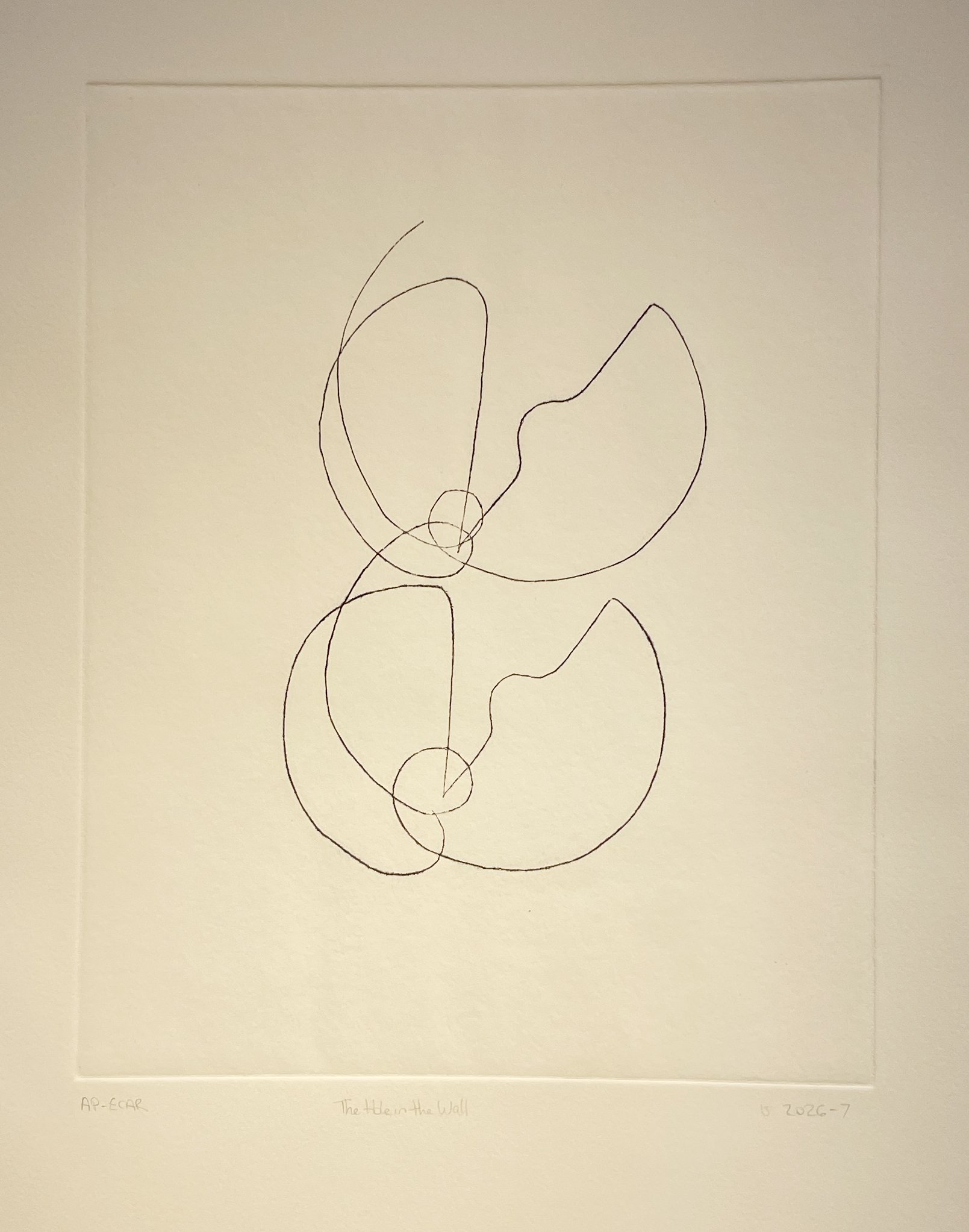
The Hole in the Wall, 2026. Collagraph, 9 3/4 x 7 7/8 in (plate). ECAR proof.

Mad Moll, 2026. Collagraph, 9 3/4 x 7 7/8 in (plate). ECAR proof.

The Female Saylor, 2026. Collagraph, 9 3/4 x 7 7/8 in (plate). ECAR proof.

The She-Favourite, 2026. Collagraph, 9 3/4 x 7 7/8 in (plate). ECAR proof.

Fair Quaker of Deal, 2026. Collagraph, 9 3/4 x 7 7/8 in (plate). ECAR proof.

Nancy Dawson, 2026. Collagraph, 9 3/4 x 7 7/8 in (plate). ECAR proof.

Something Different, 2026. Collagraph, 9 3/4 x 7 7/8 in (plate). ECAR proof.

Malarky, 2026. Collagraph, 9 3/4 x 7 7/8 in (plate). ECAR proof.

Installation view.

Installation view.

Installation view.
I’ve worked with Linda Game and several other musicians to interpret the Dancing Queer History preparatory sketches and collagraphs as graphic scores.
This ongoing series of monoprints is made by dancing specified social folk dance figures on dry pigments, including spices and powdered tempera paint. It is part of Dancing Queer History. Dancers chose figures and colours collaboratively.
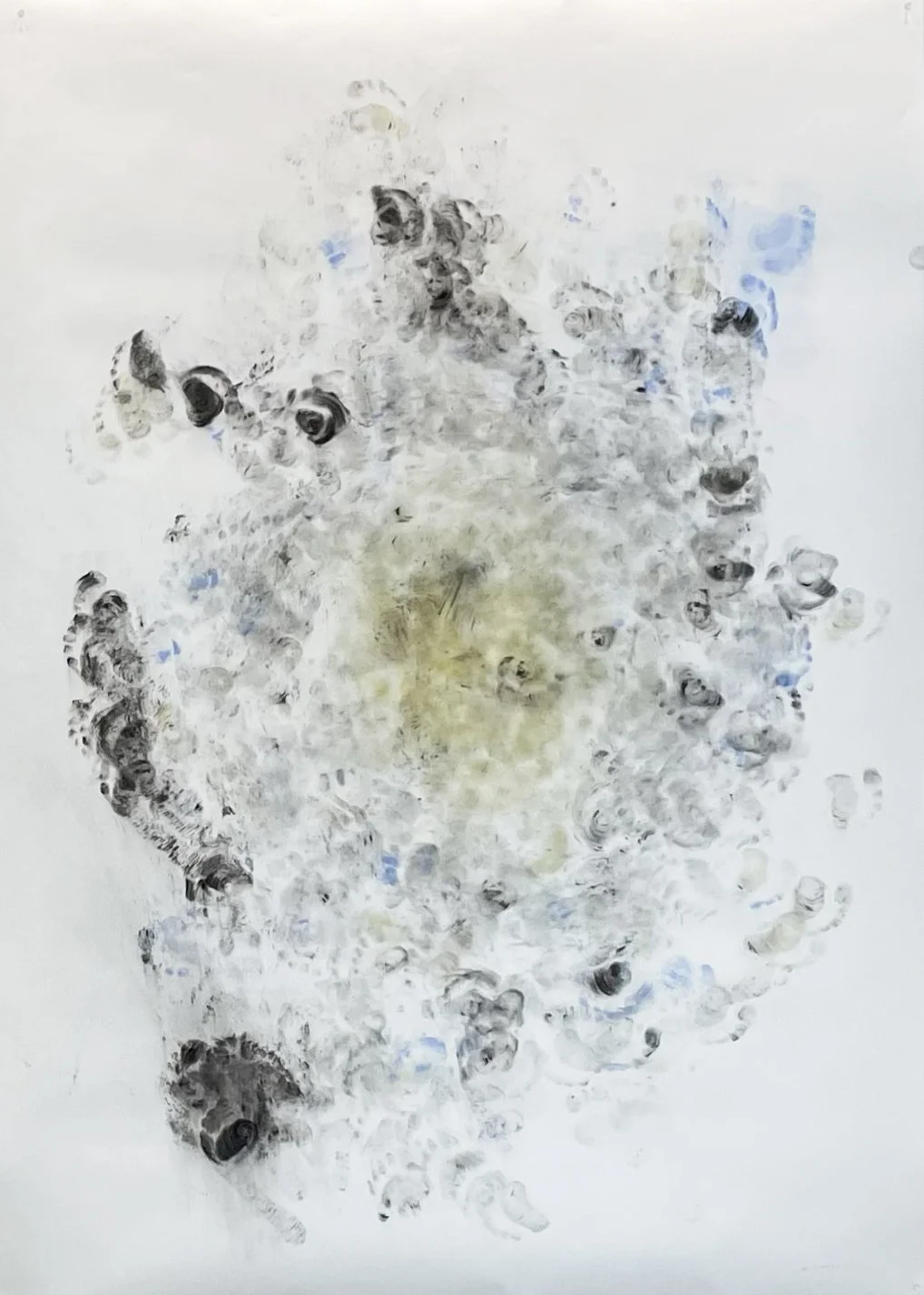
Do-si-do, Balance and Swing (Al and Louise), 2026. Tempera and turmeric on paper, 84 x 52 inches (approx.).
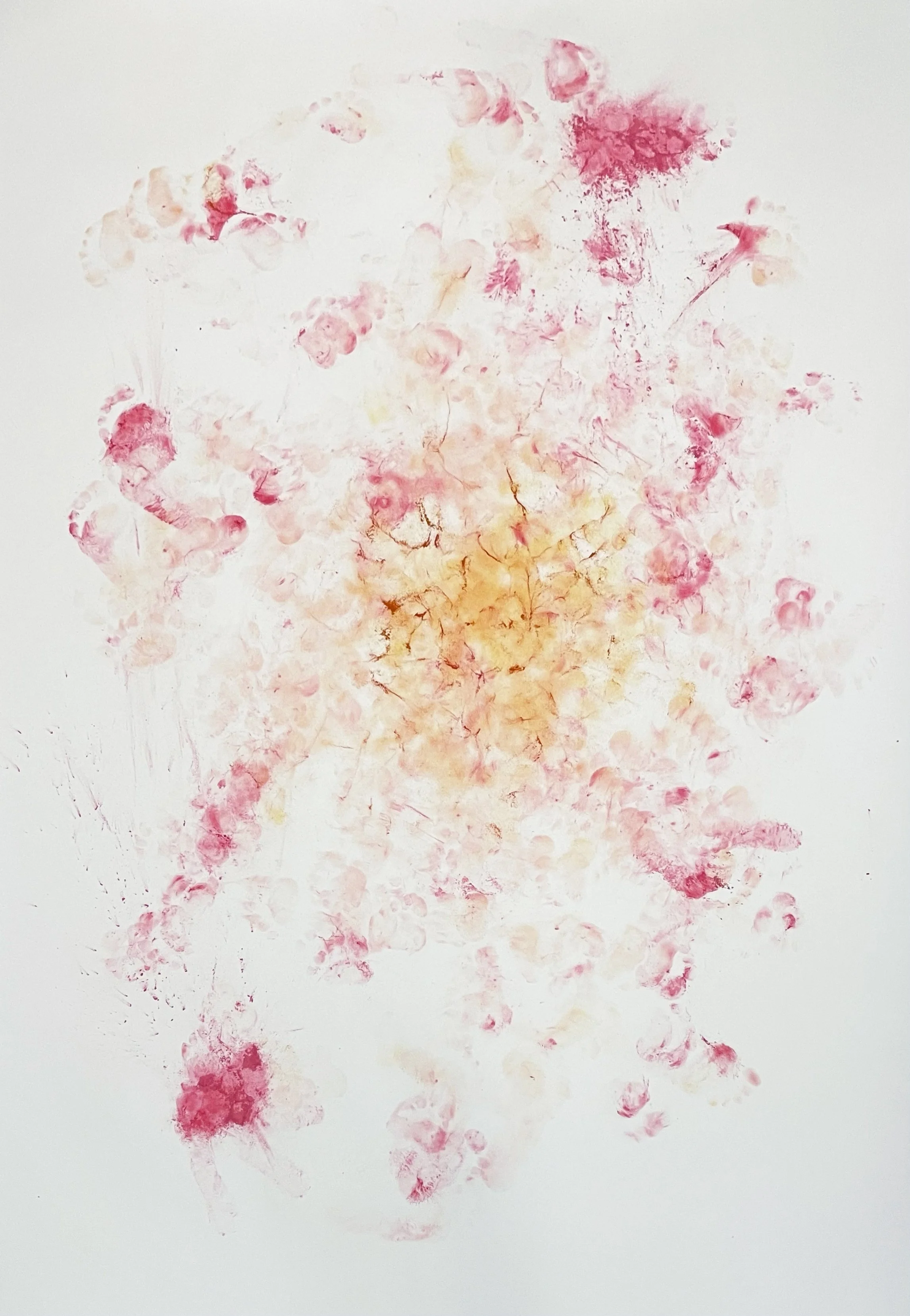
Do-si-do and Swing (Al and Louise), 2026. Tempera and turmeric on paper, 84 x 52 in. (approx.).
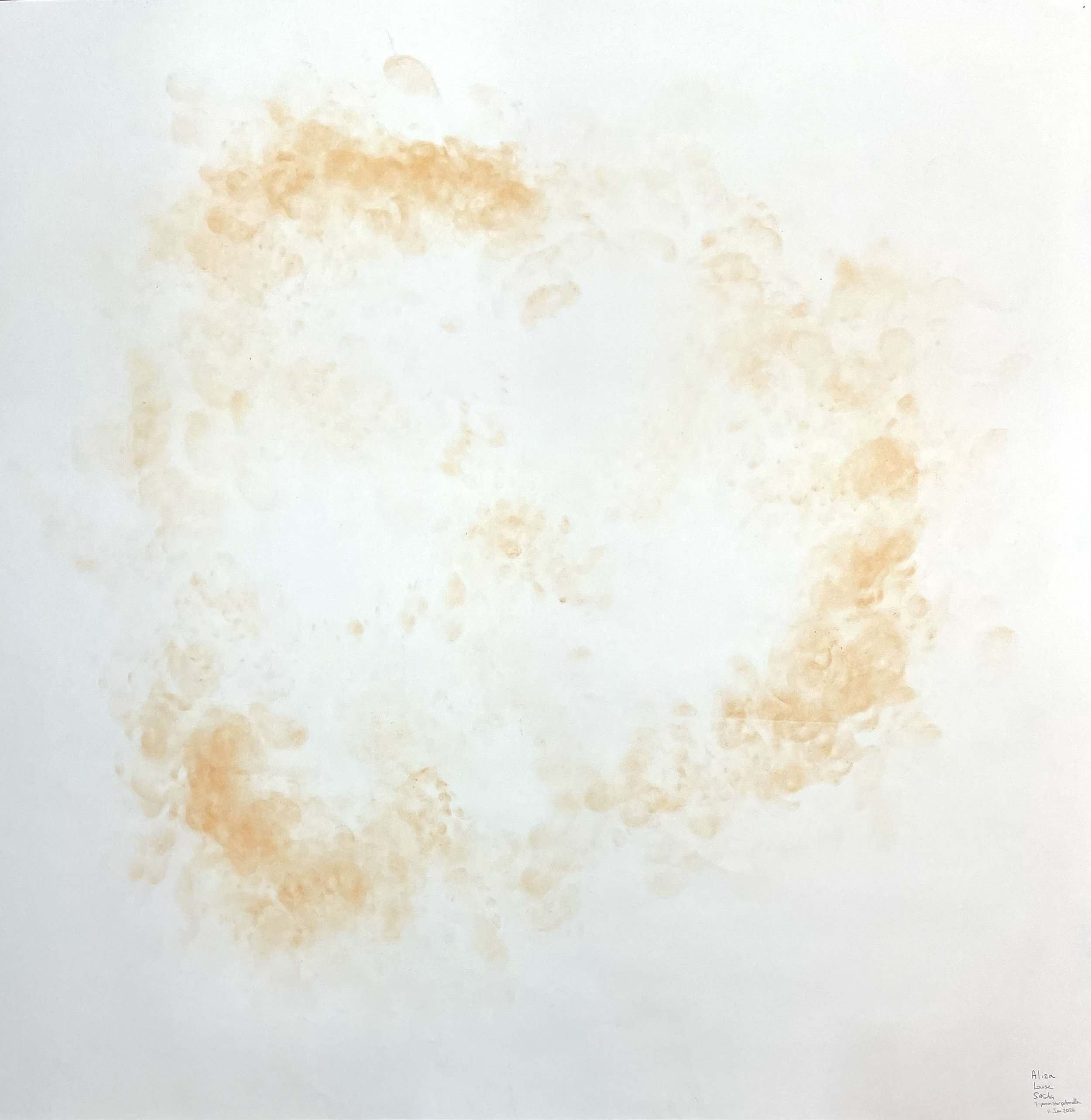
Star Petronella (Aliza, Louise, and Sasha), 2026. Paprika on paper, 52 x 52 in (approx.).
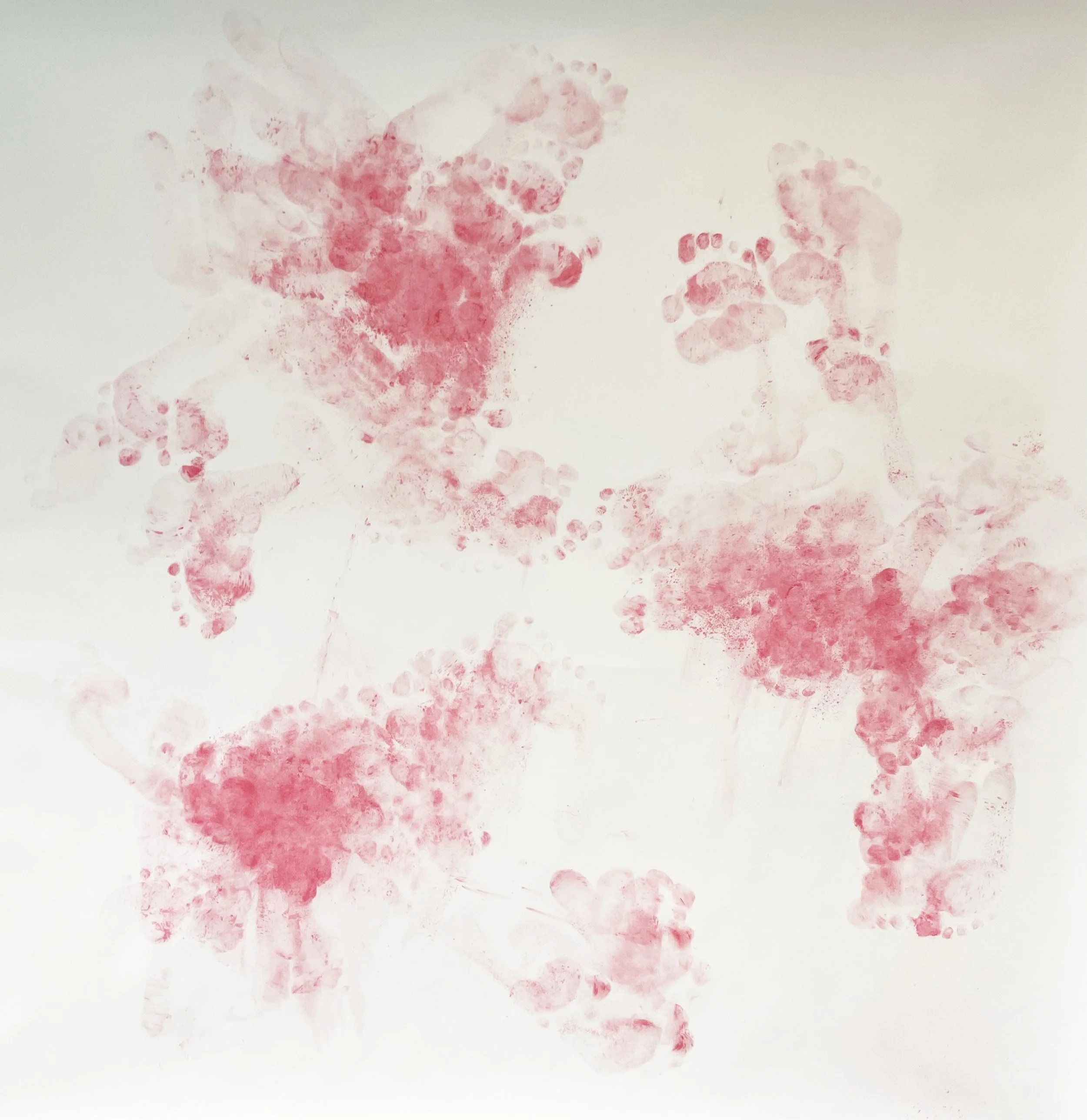
Star Petronella (Linda, Louise, and Sophie), 2026. Tempera on paper, 52 x 52 in. (approx.).
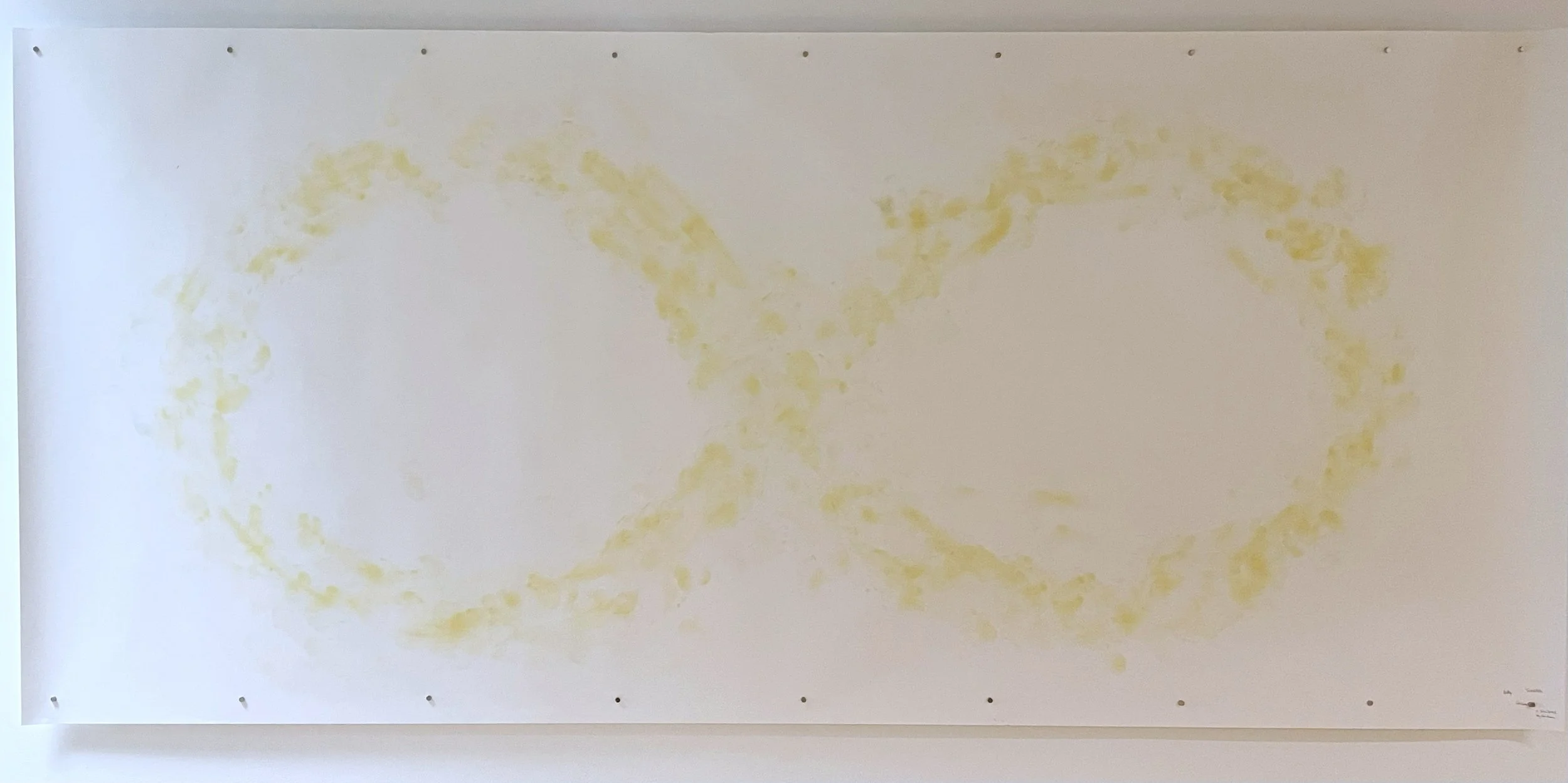
Hey for Three (Dicky, Louise, and Sasha), 2026. Turmeric on paper, 52 x 105 in. (approx.). Installation view.
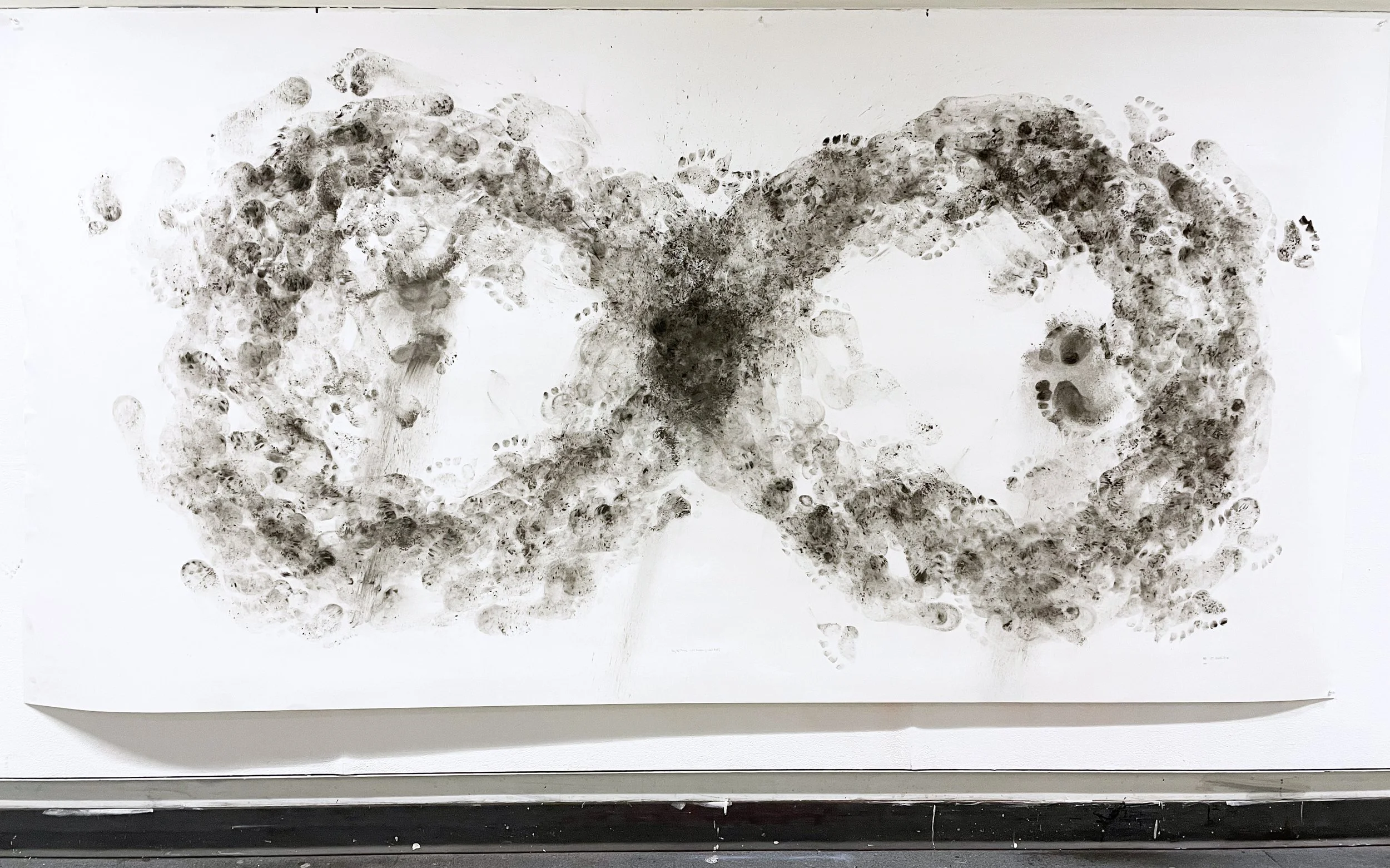
Hey for Three (Al, Louise, Will), 2026. Tempera on paper, approx. 52 x 95 inches.
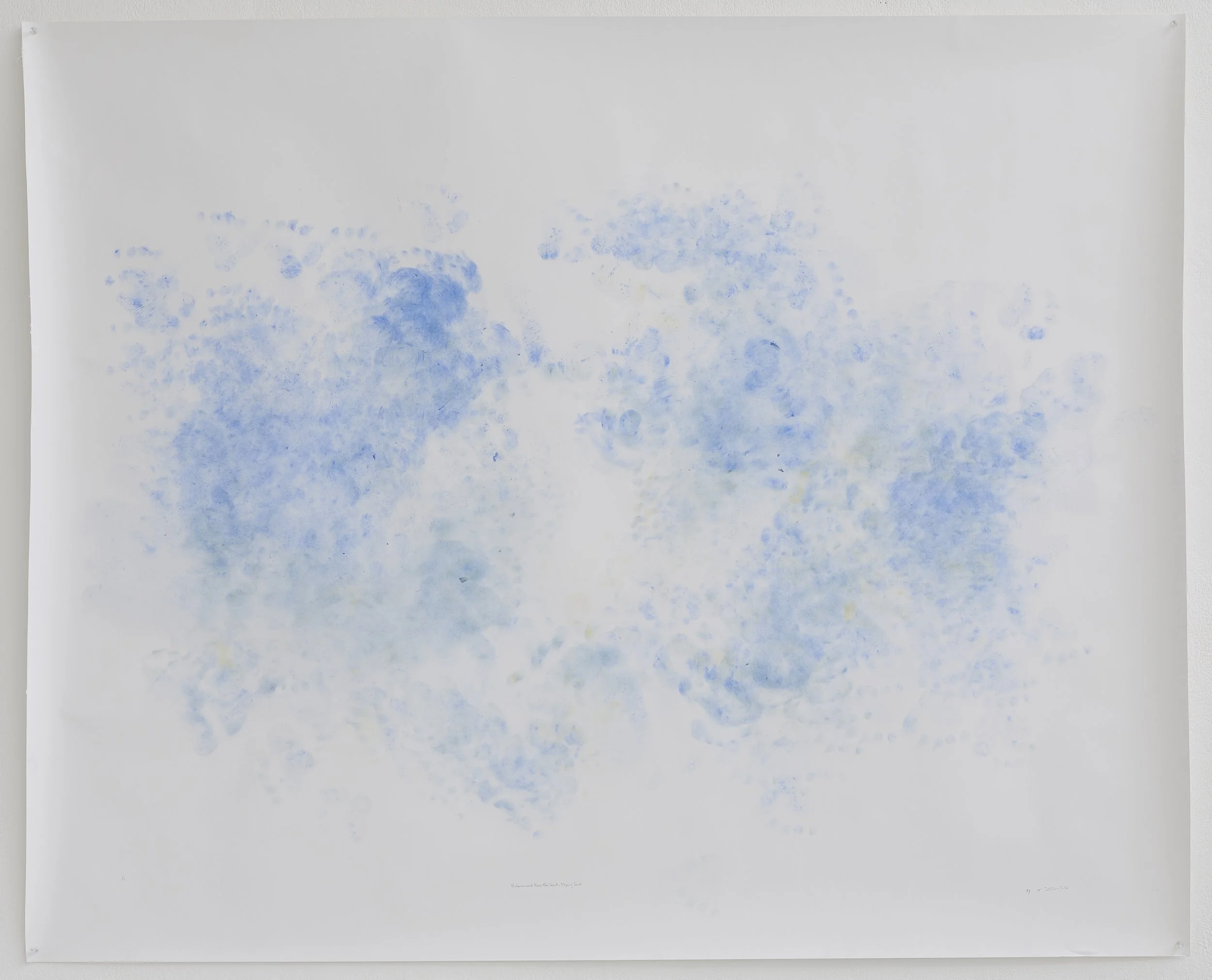
Balance and Box the Gnat - Flying Tent (Al & Louise), 2026. Powdered tempera and turmeric on paper, approx. 52 x 75 inches. Photograph by Dave Gibbons.
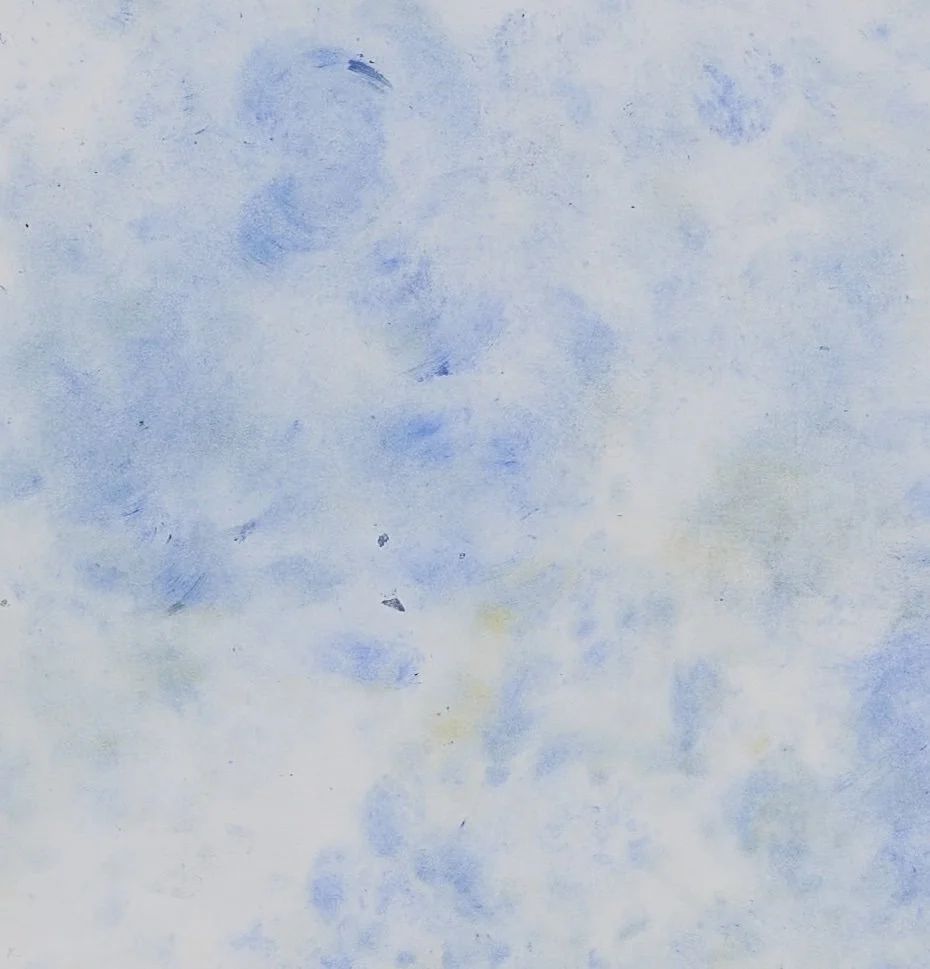
Balance and Box the Gnat - Flying Tent (detail), 2026.
A series of monoprints made by dancing on carbon and transfer papers. This work is part of Dancing Queer History.
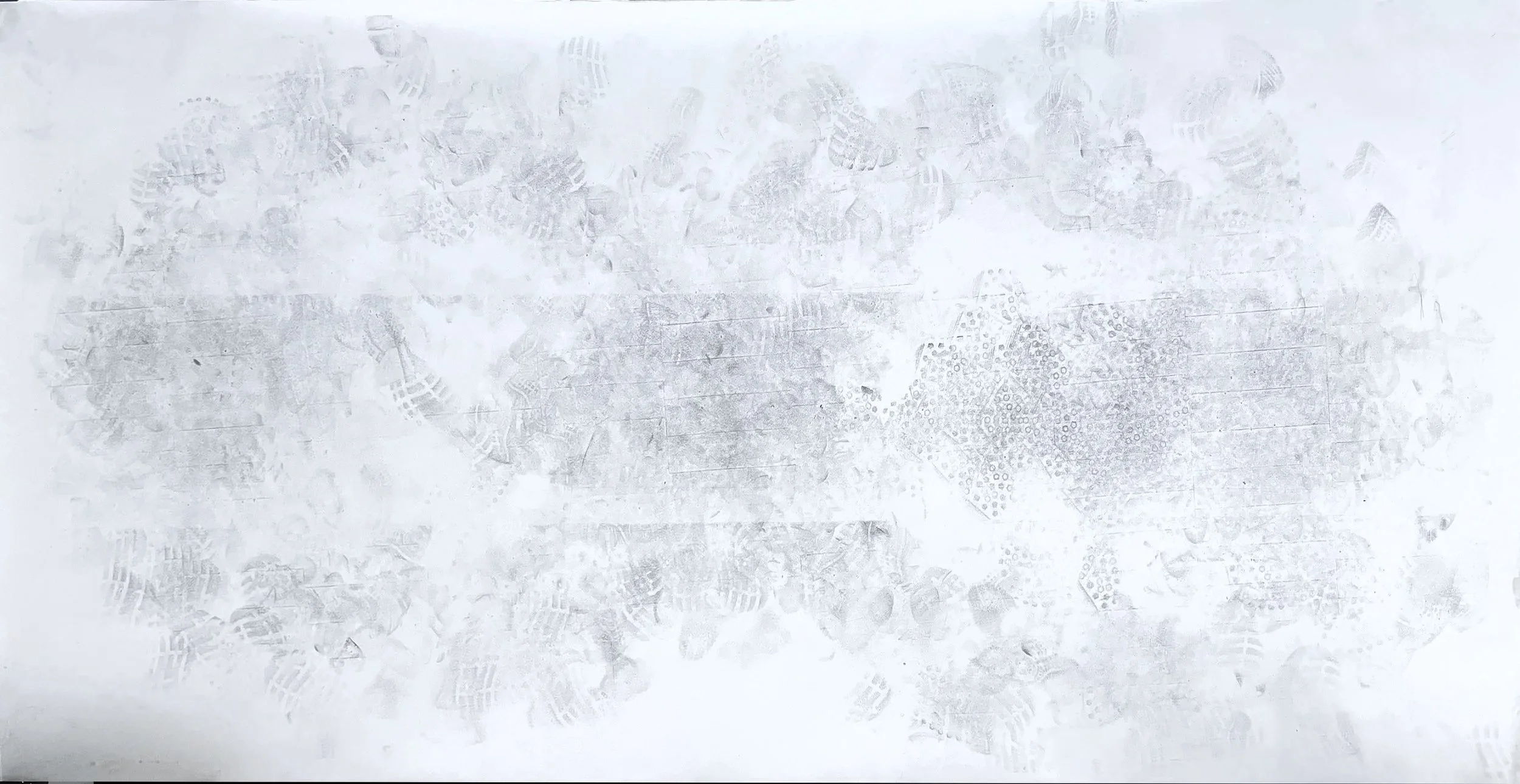
Reel of Three (with rant stepping), carbon paper monoprint, 2026. 50.5 x 110 inches (est.). Participants were Louise Siddons, Lottie Turner, Tom Goodale, Nigel Sharp, Linda Moon, Anna Ruth Rowan, Skye Purchase, Simon Peachey, and Linda Game on fiddle.
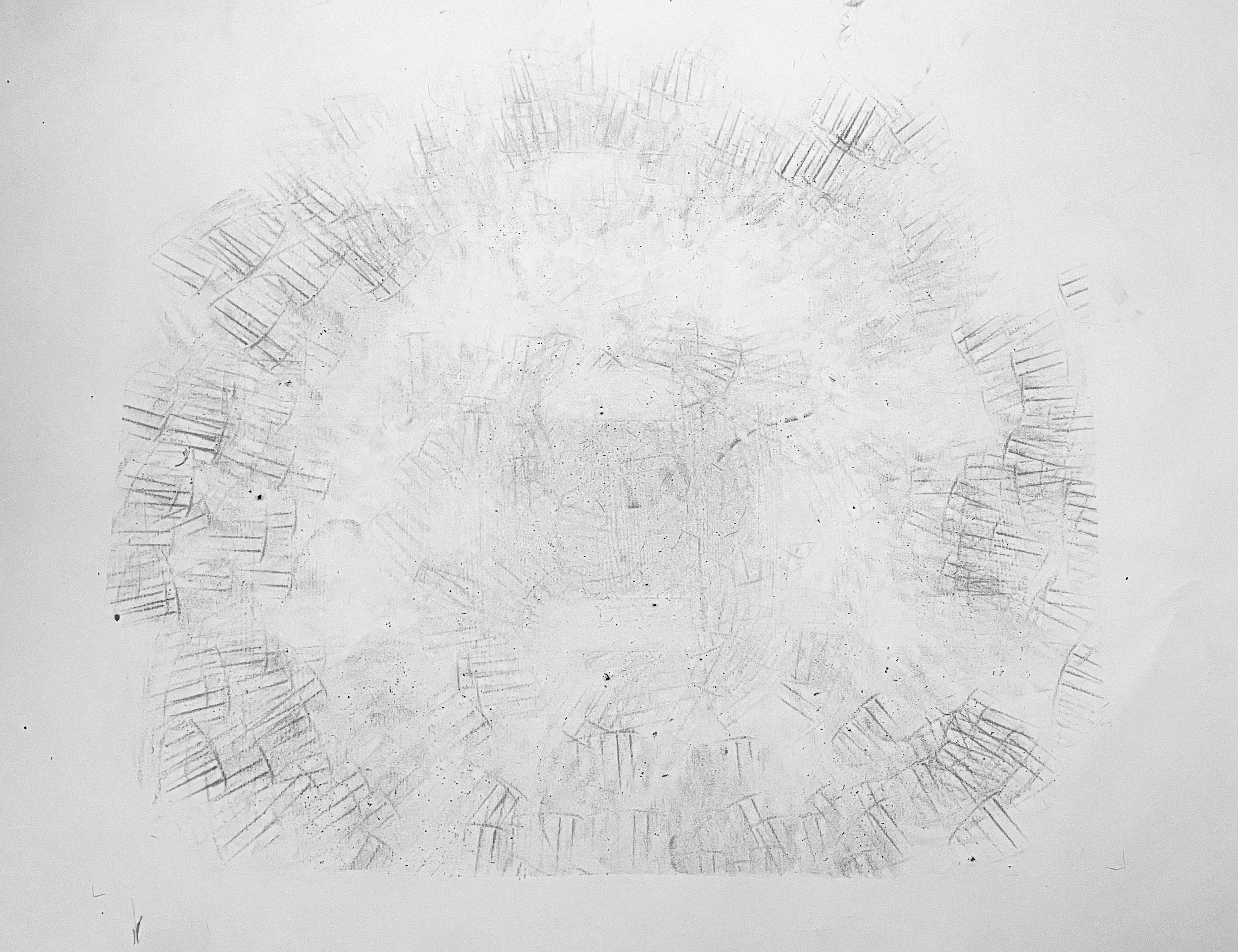
Swing (Linda & Louise), carbon paper monoprint, 2026.
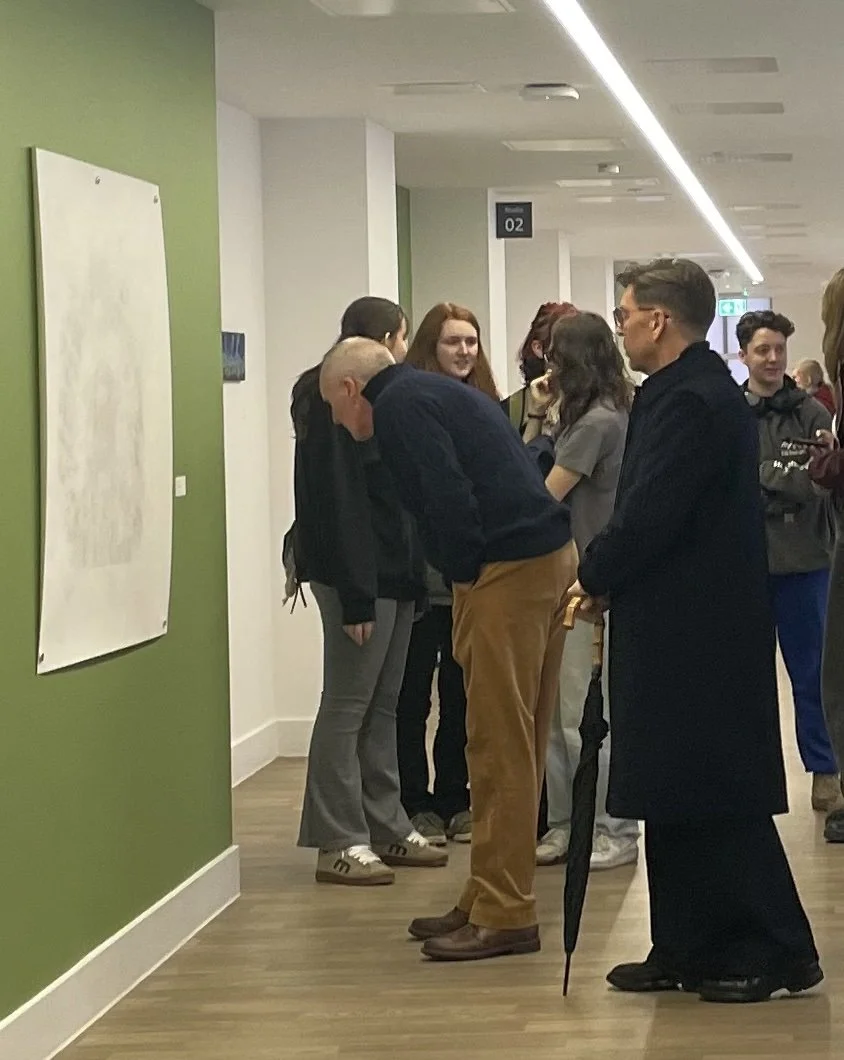
Swing (Linda and Louise), 2026, on view at Jubilee Sports Hall, University of Southampton.
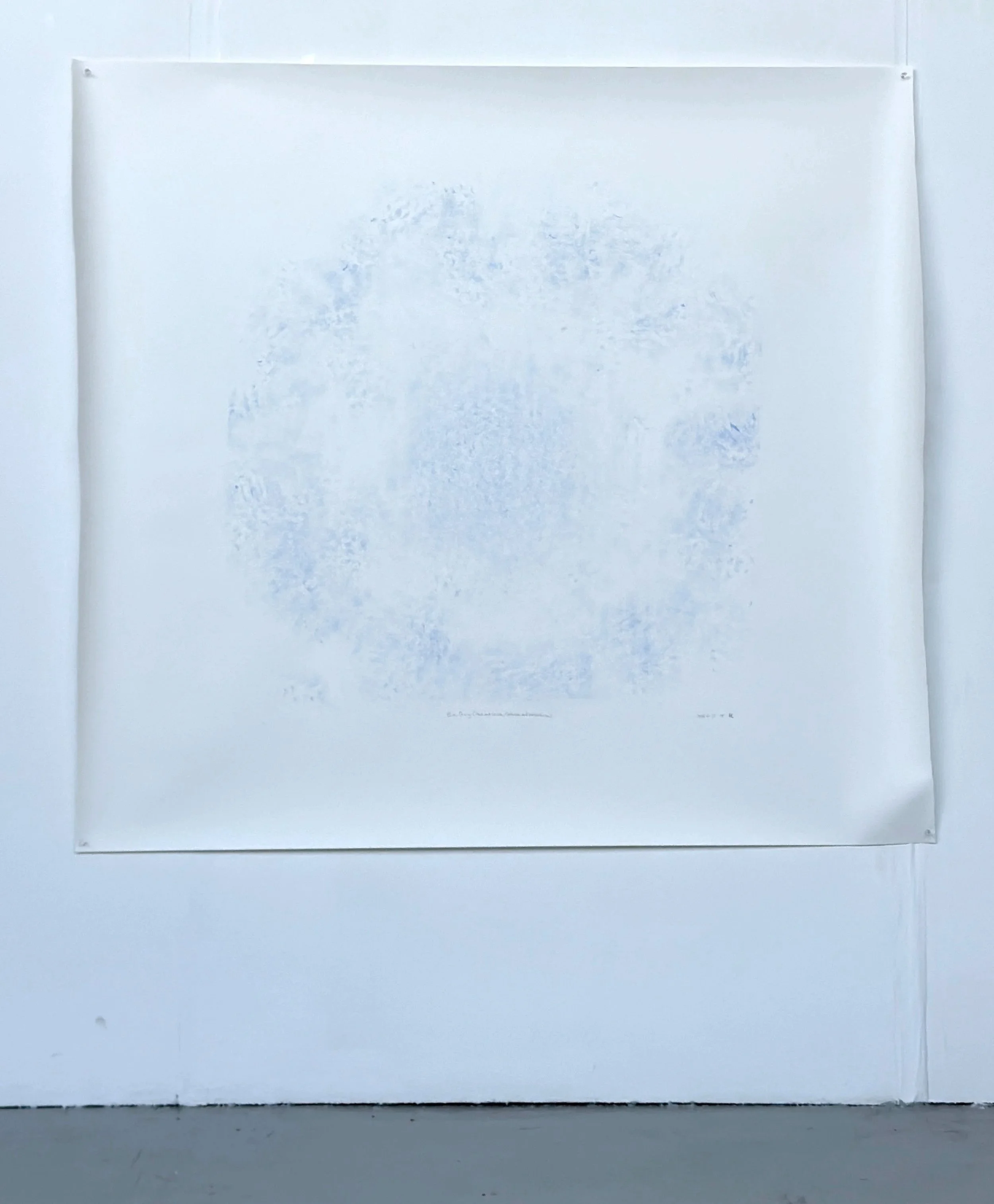
Swing (Hsiu & Louise, clockwise and anticlockwise), blue transfer paper monoprint with burlap, 2026. Participants: Hsiu Chang, Louise Siddons, Molly Tucker (fiddle), Linda Game (fiddle). Photograph by Dave Gibbons.
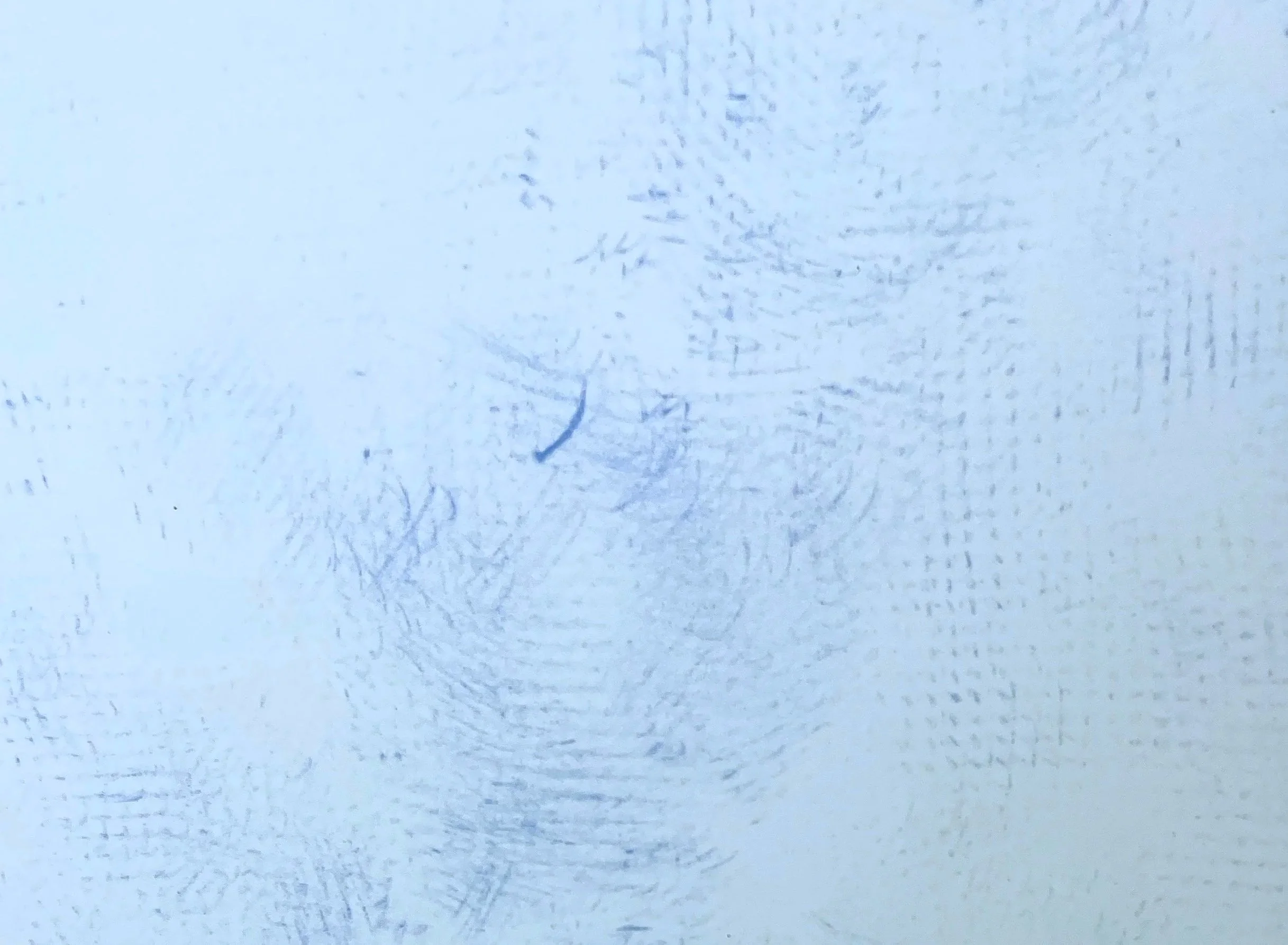
Swing (Hsiu & Louise, clockwise and anticlockwise), detail, 2026.
Back in the printmaking studio in 2022, I began to explore distance and knowledge in relation to 18th-century scientific illustrations, connecting my background in biological illustration with my interest in 18th-century dance diagrams. Trainer, a short animated film, thematizes the reciprocal wear on the body as it marks the earth by walking, running, or dancing. The film was exhibited in the 2023 exhibition Wastework, curated by Ian Dawson, along with the original relief prints.
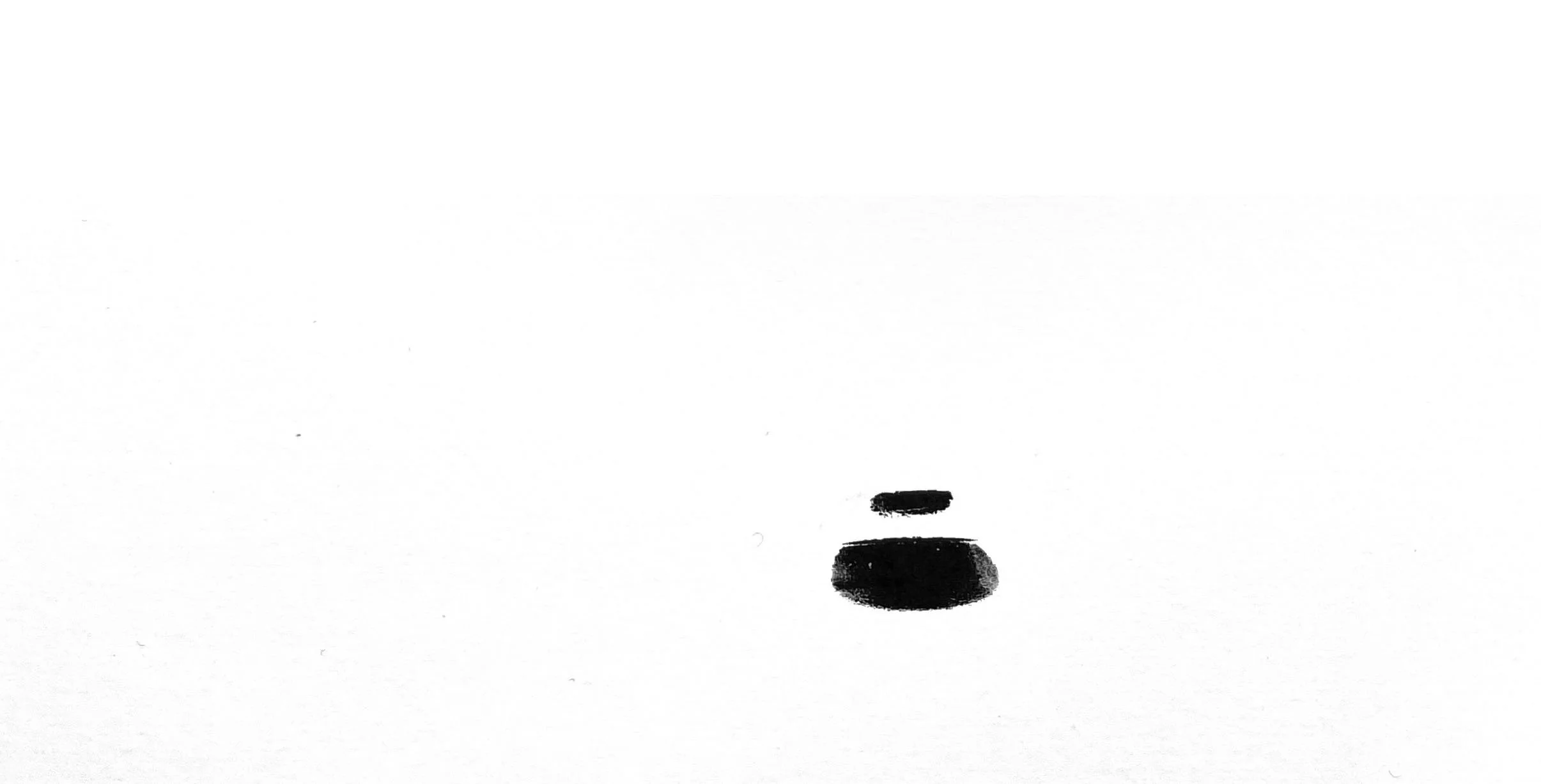
Trainer (stills), 2023. Relief prints from sliced trainer (sneaker).
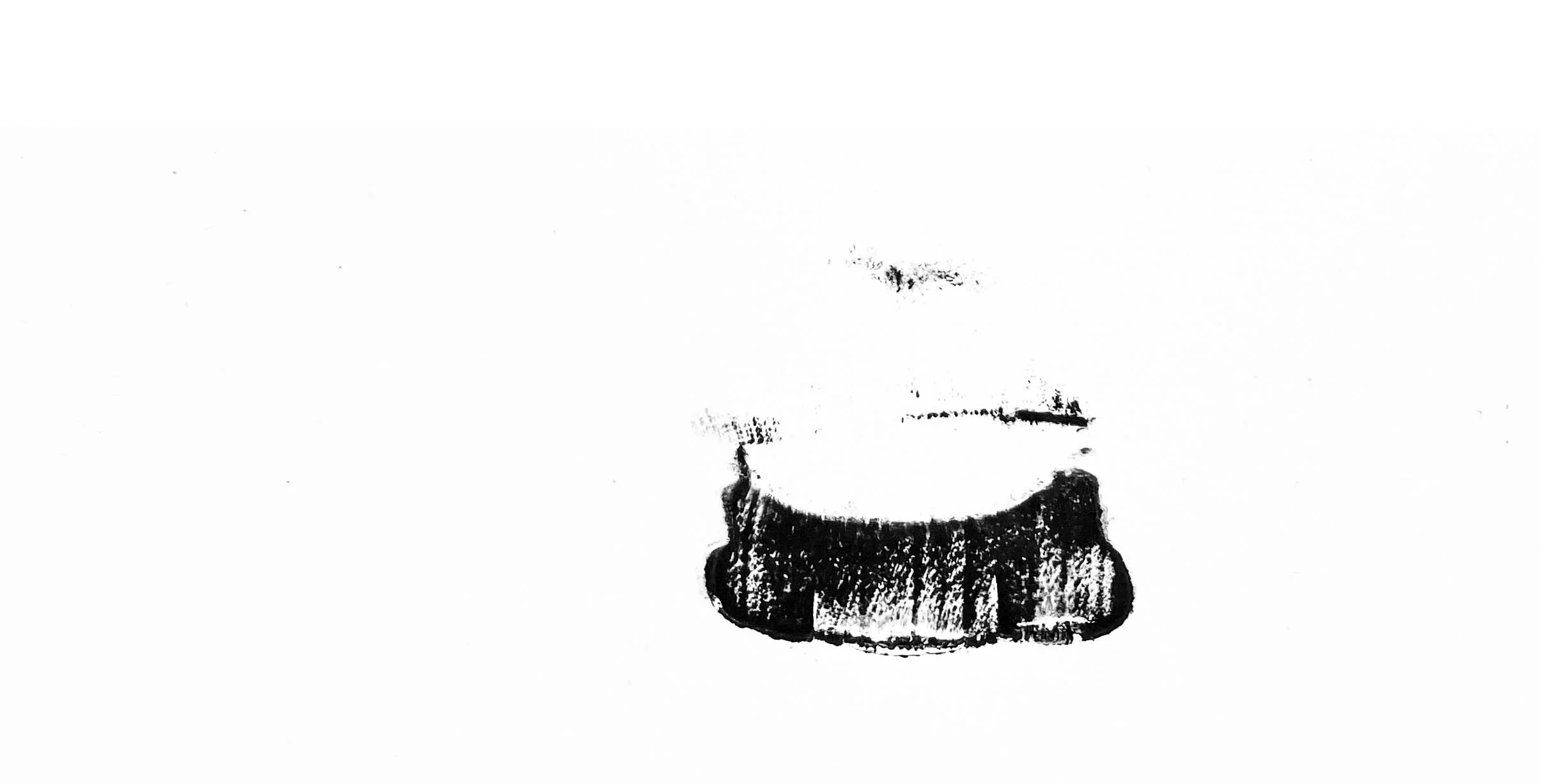
Trainer (stills), 2023. Relief prints from sliced trainer (sneaker).
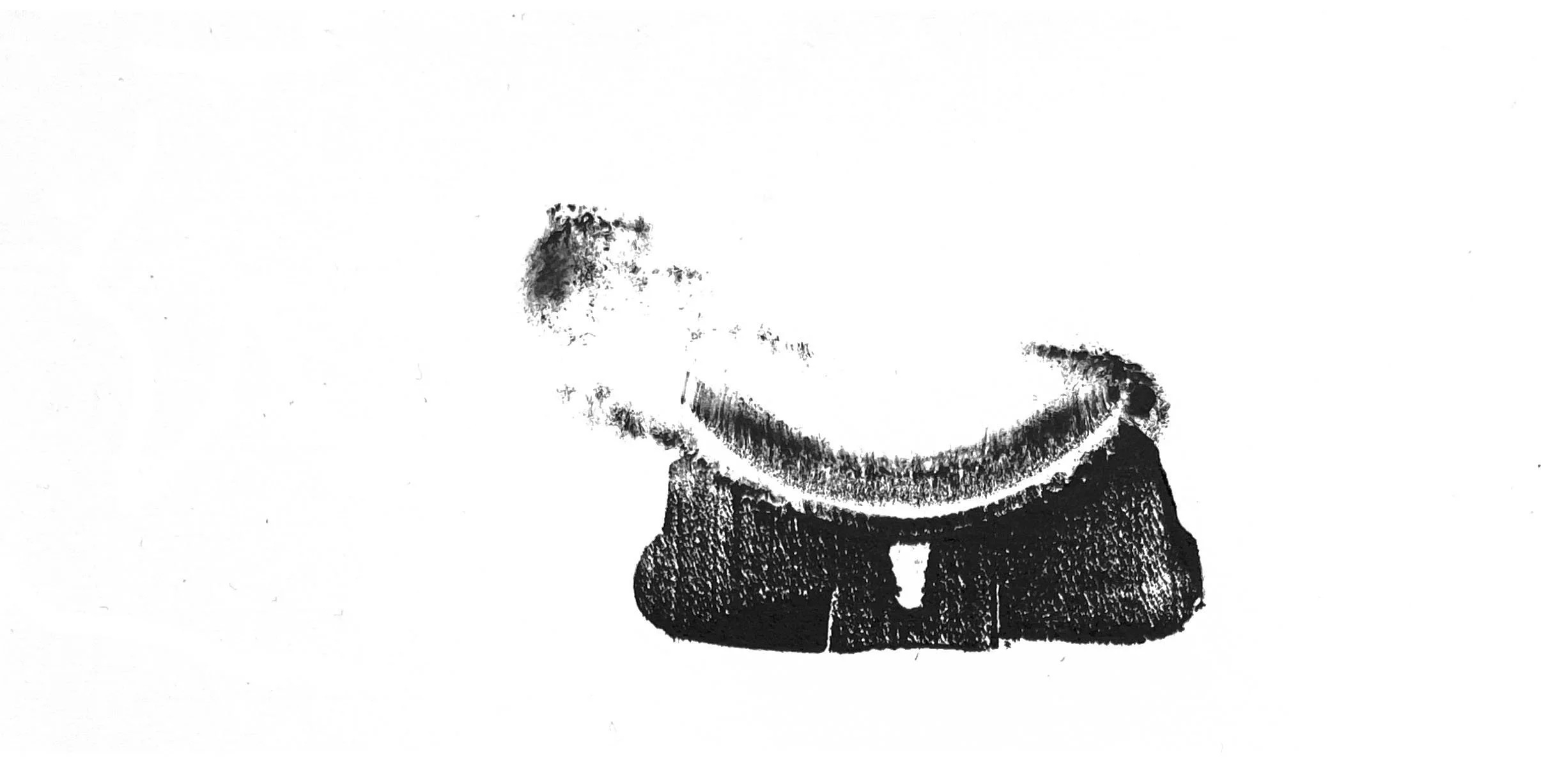
Trainer (stills), 2023. Relief prints from sliced trainer (sneaker).
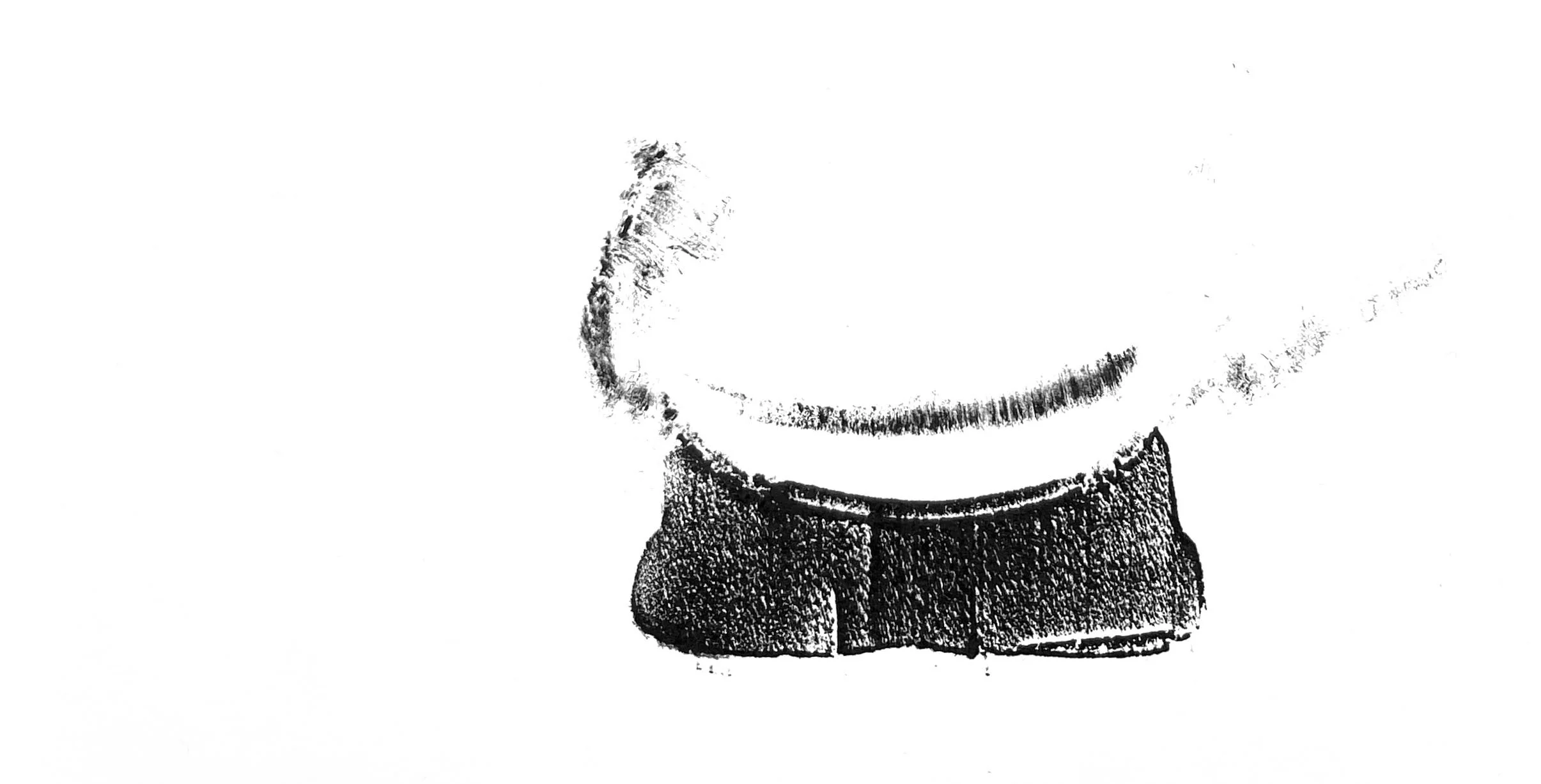
Trainer (stills), 2023. Relief prints from sliced trainer (sneaker).
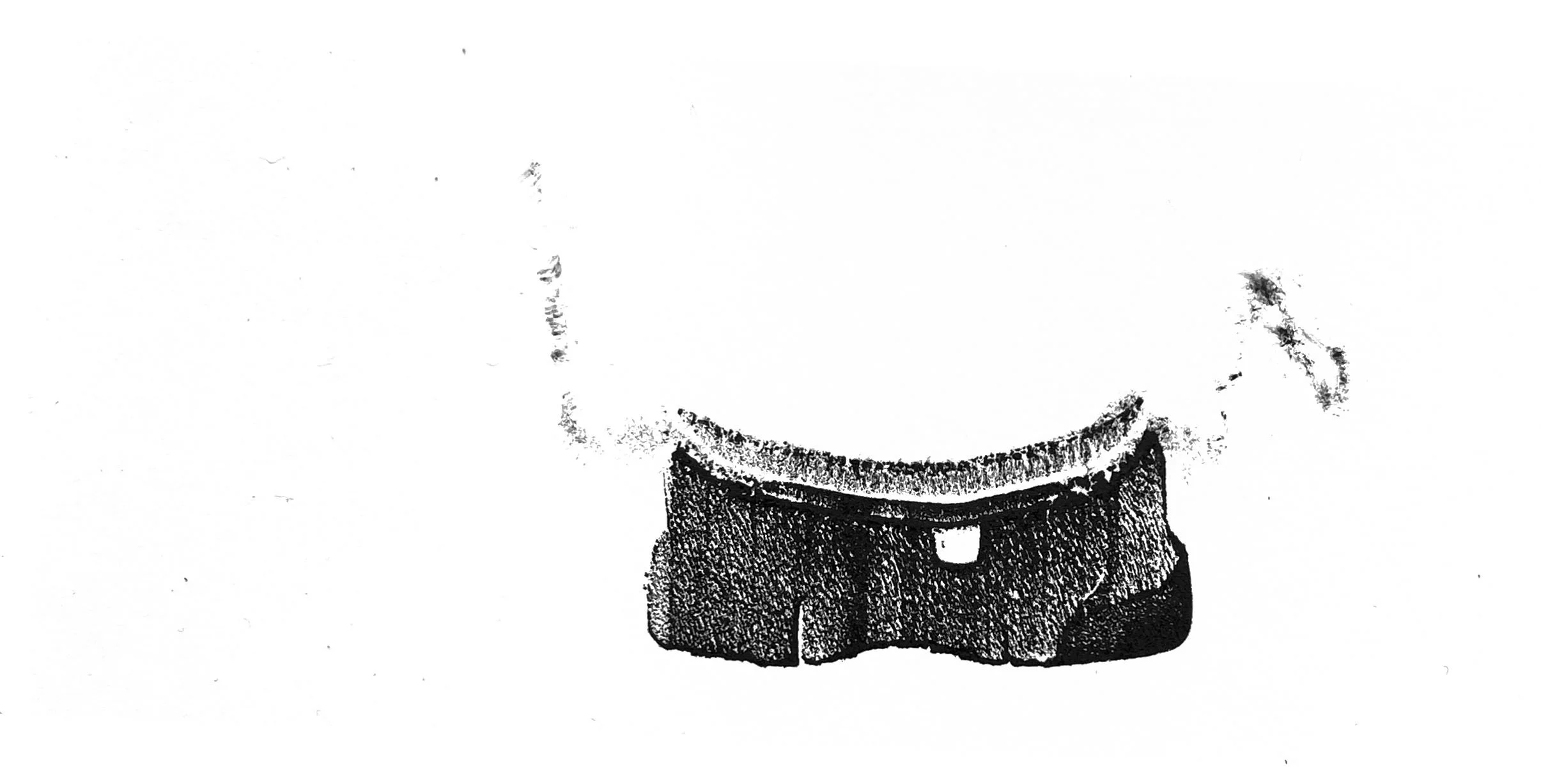
Trainer (stills), 2023. Relief prints from sliced trainer (sneaker).
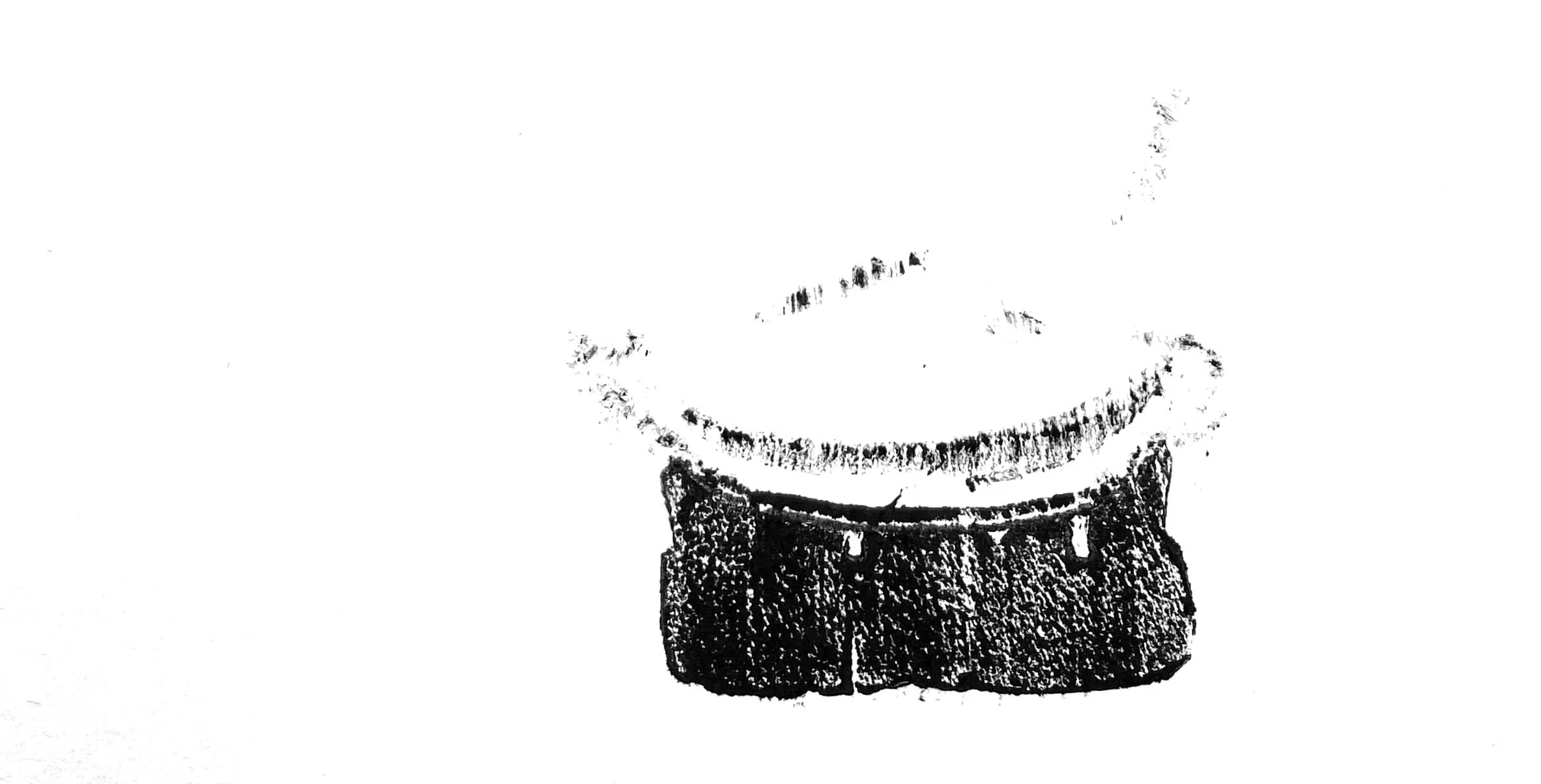
Trainer (stills), 2023. Relief prints from sliced trainer (sneaker).
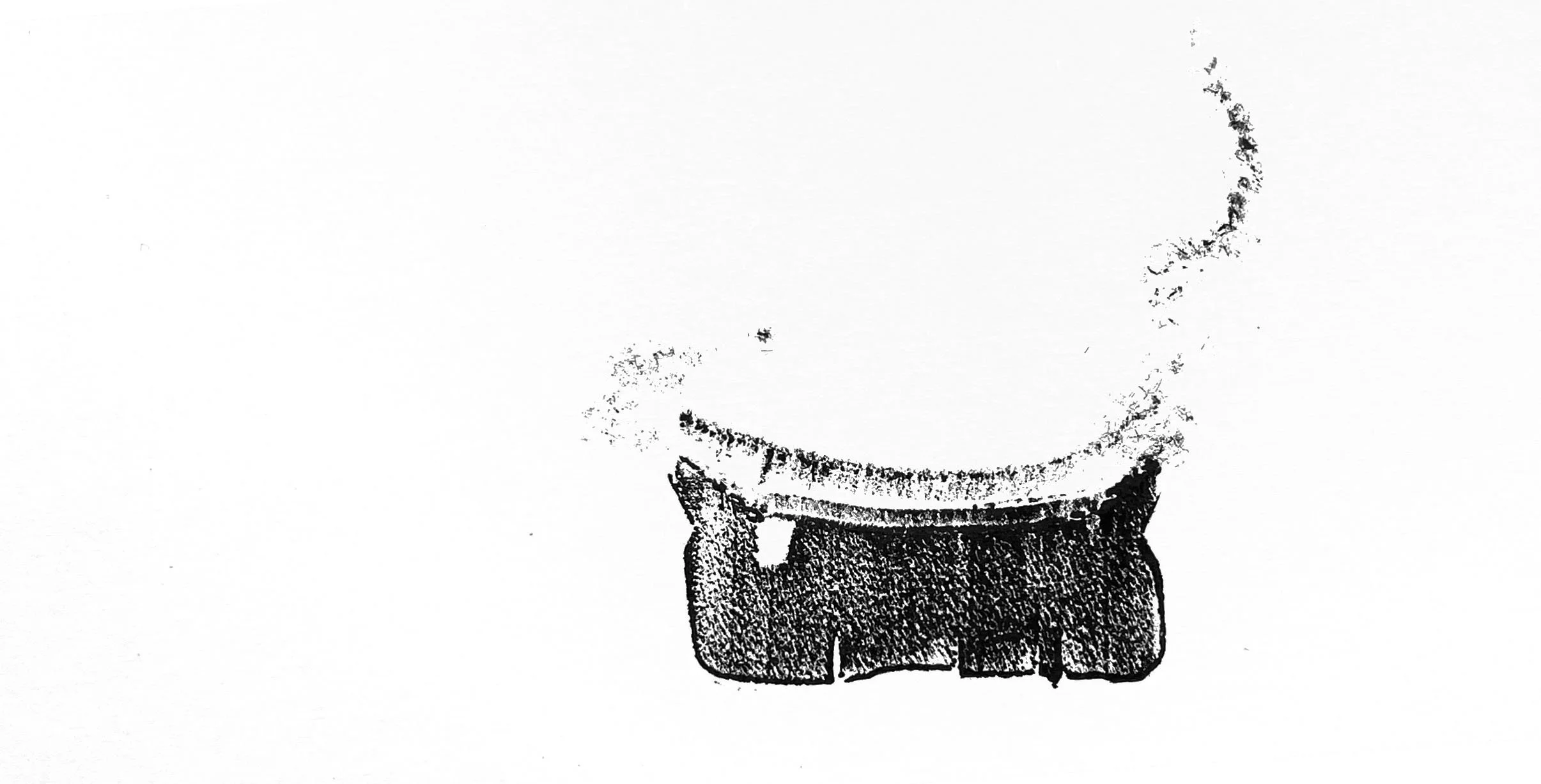
Trainer (stills), 2023. Relief prints from sliced trainer (sneaker).
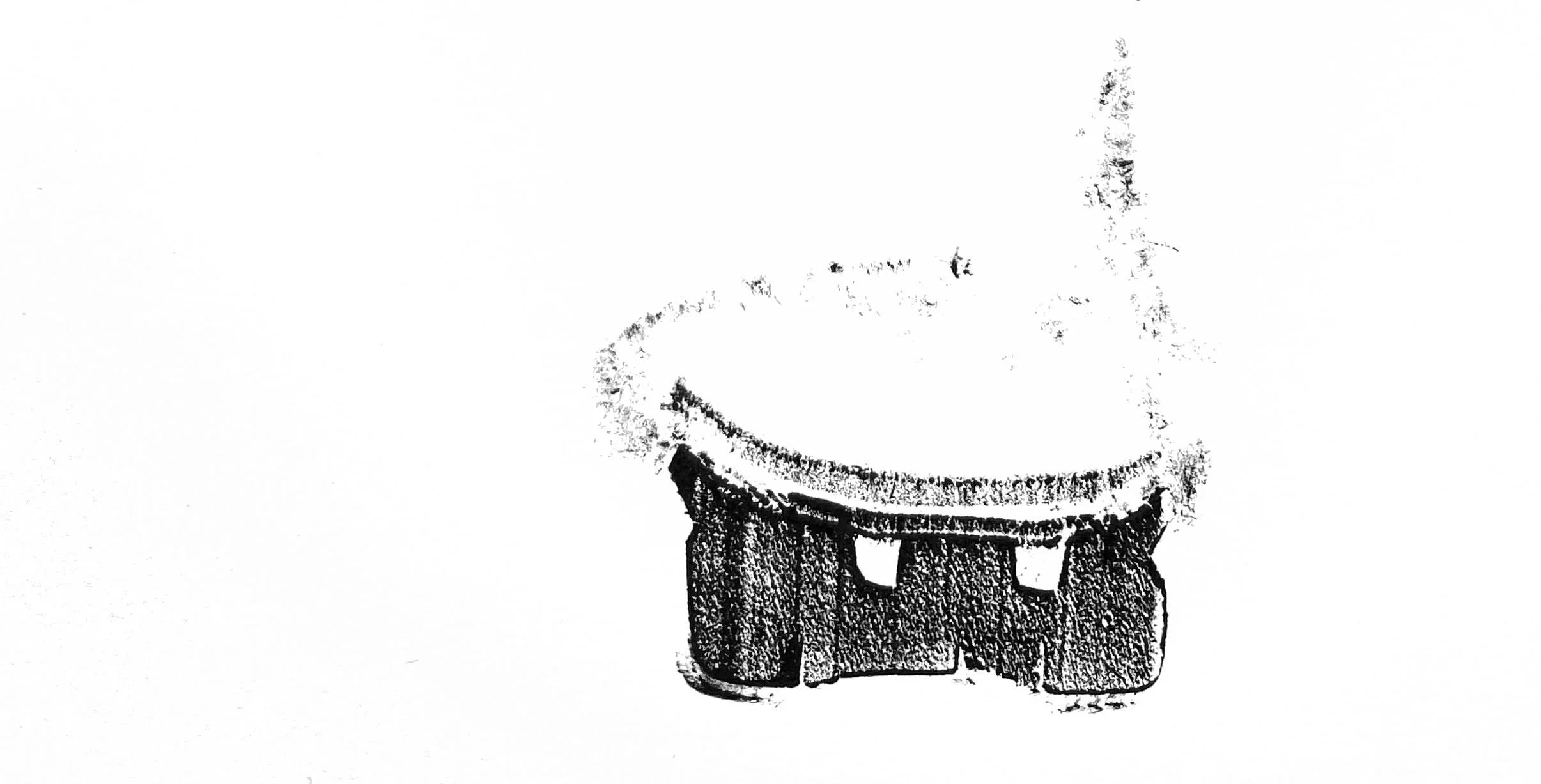
Trainer (stills), 2023. Relief prints from sliced trainer (sneaker).
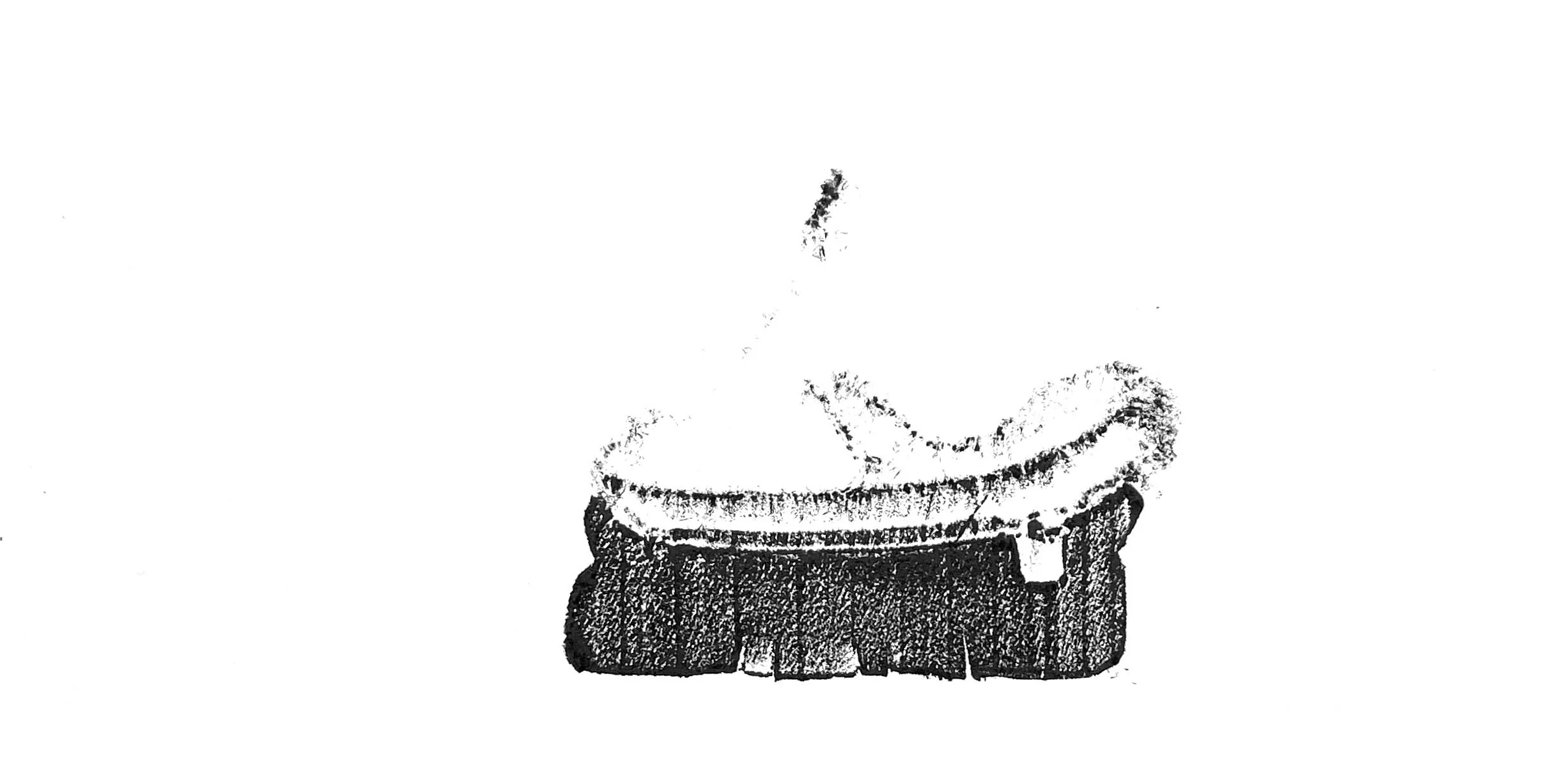
Trainer (stills), 2023. Relief prints from sliced trainer (sneaker).
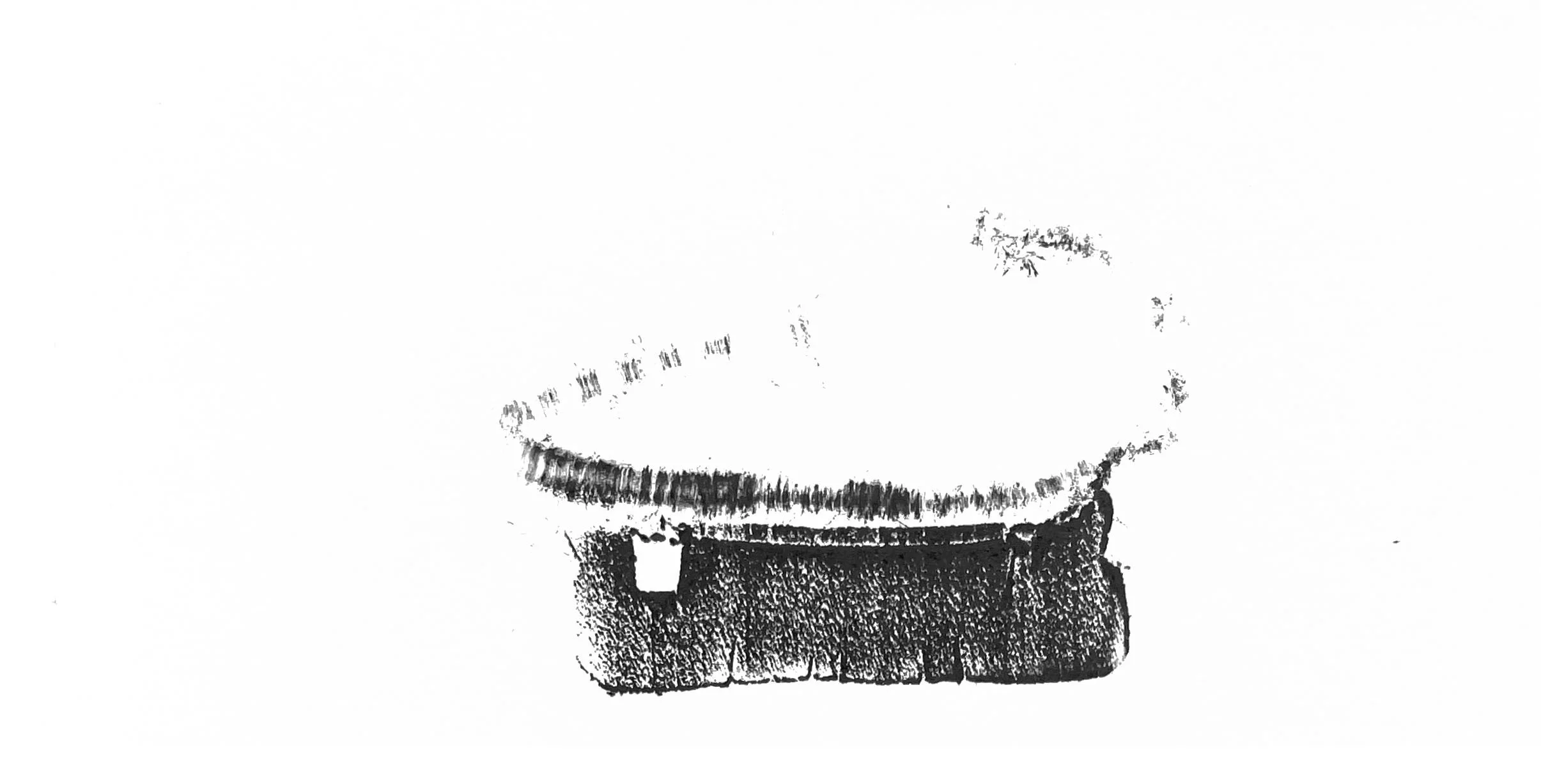
Trainer (stills), 2023. Relief prints from sliced trainer (sneaker).
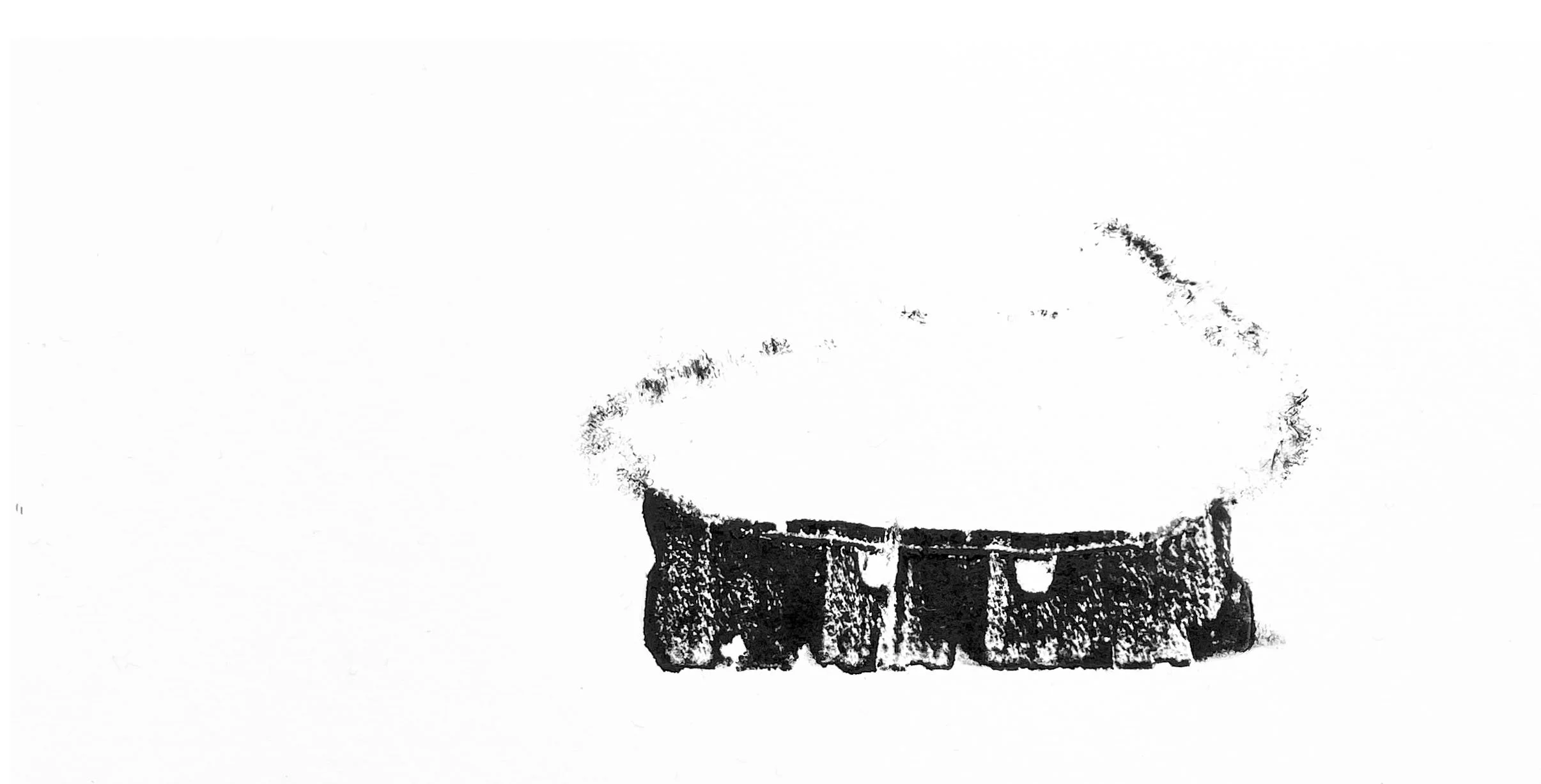
Trainer (stills), 2023. Relief prints from sliced trainer (sneaker).
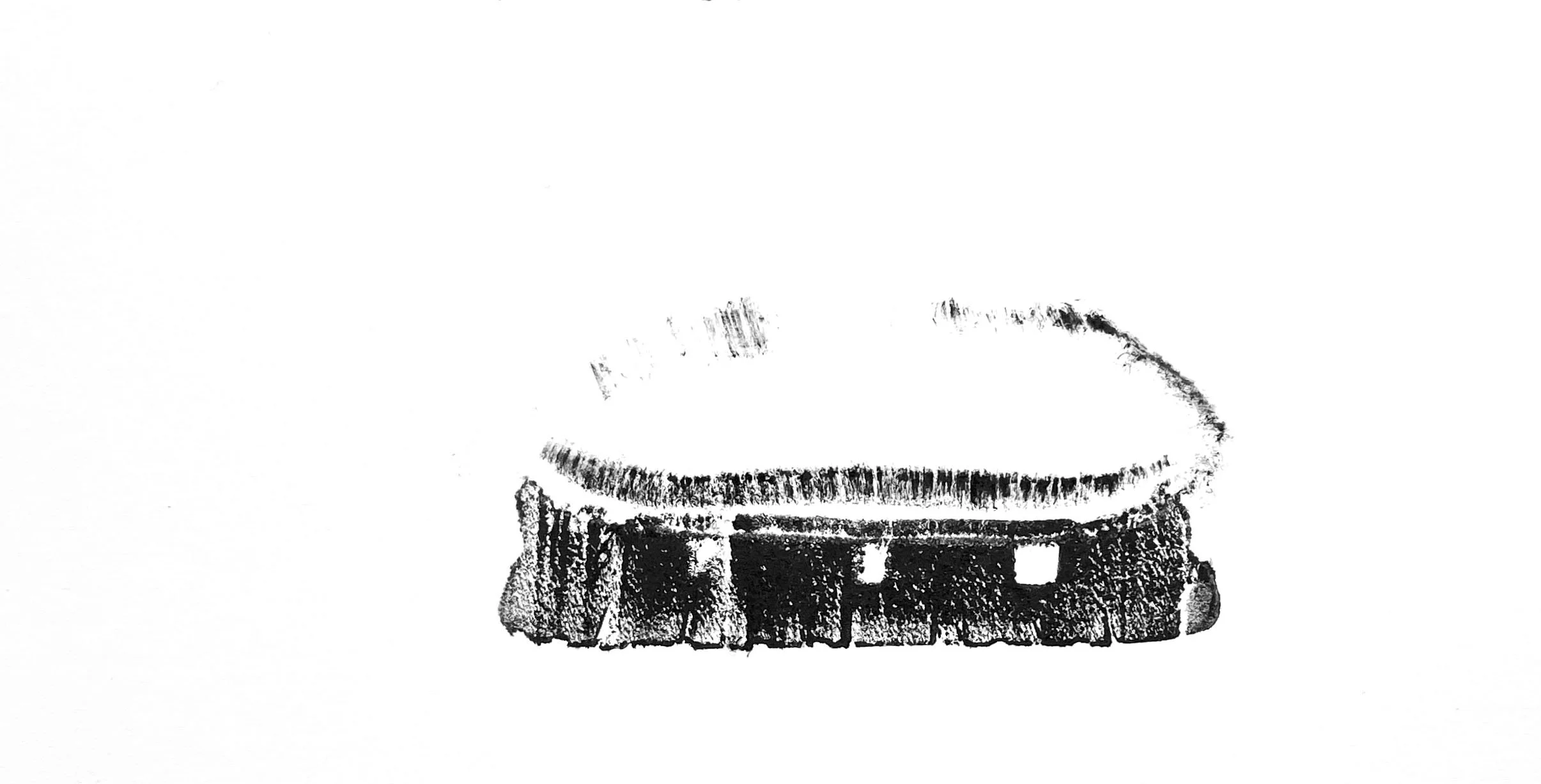
Trainer (stills), 2023. Relief prints from sliced trainer (sneaker).
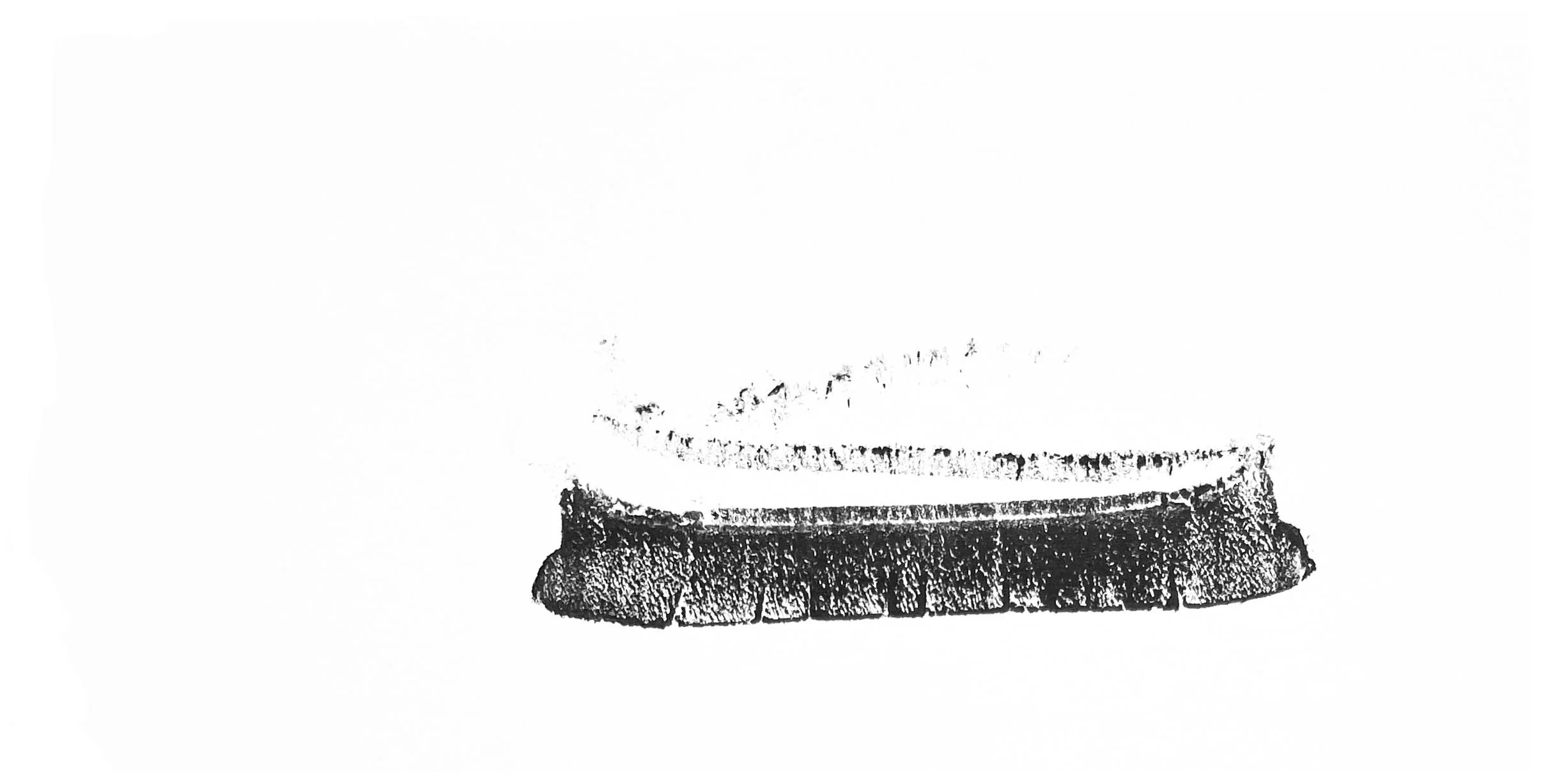
Trainer (stills), 2023. Relief prints from sliced trainer (sneaker).
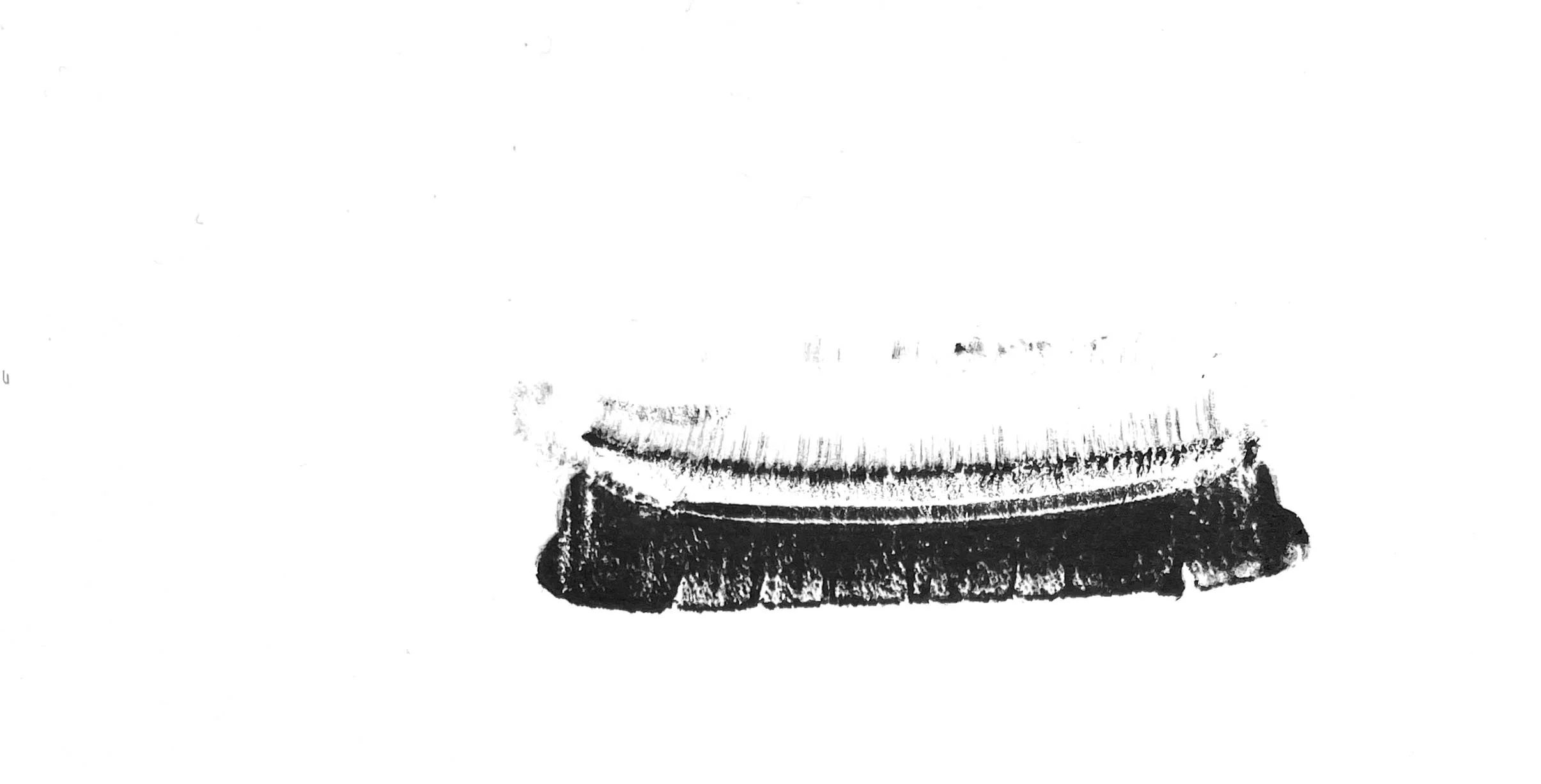
Trainer (stills), 2023. Relief prints from sliced trainer (sneaker).
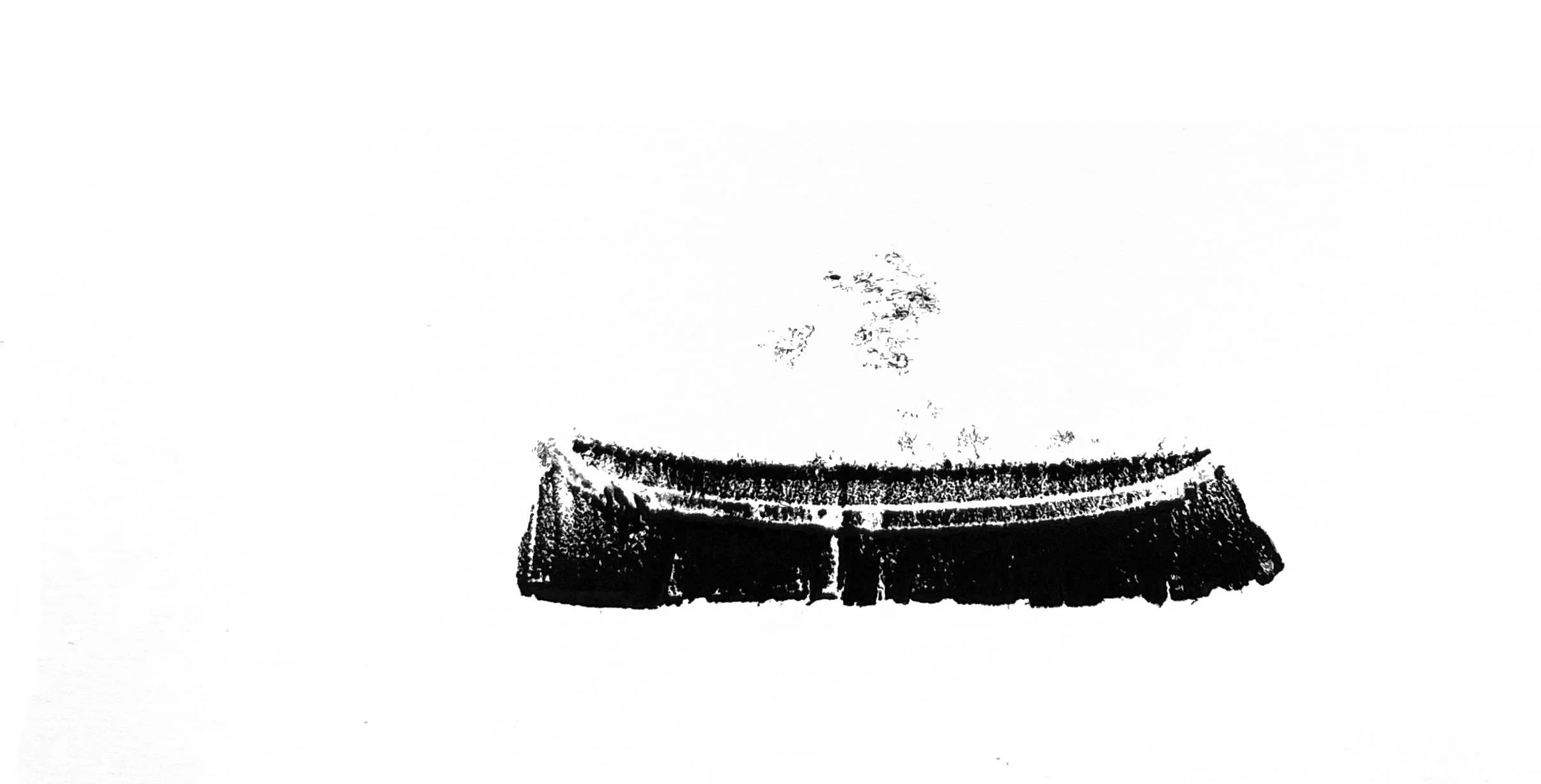
Trainer (stills), 2023. Relief prints from sliced trainer (sneaker).
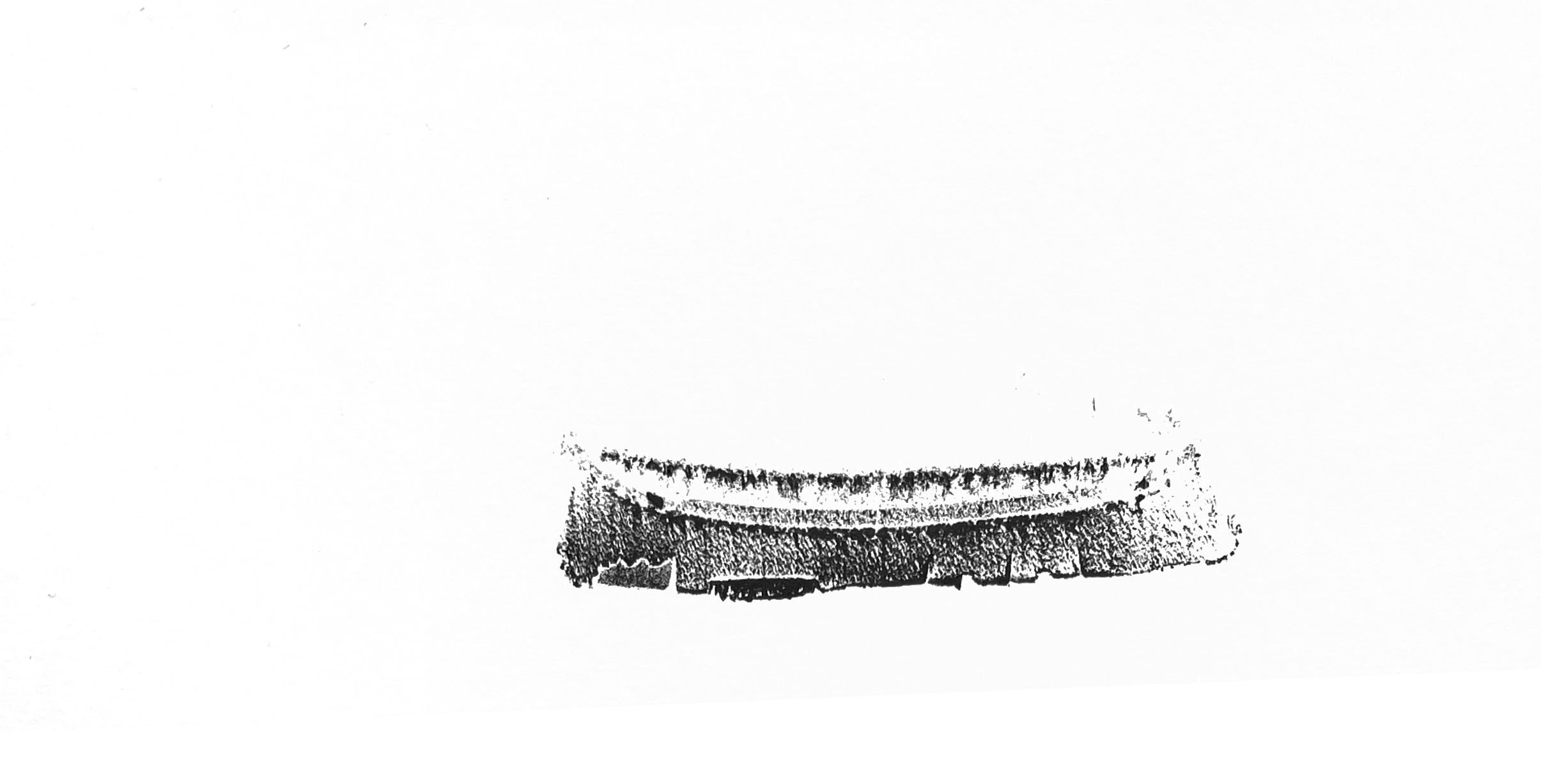
Trainer (stills), 2023. Relief prints from sliced trainer (sneaker).
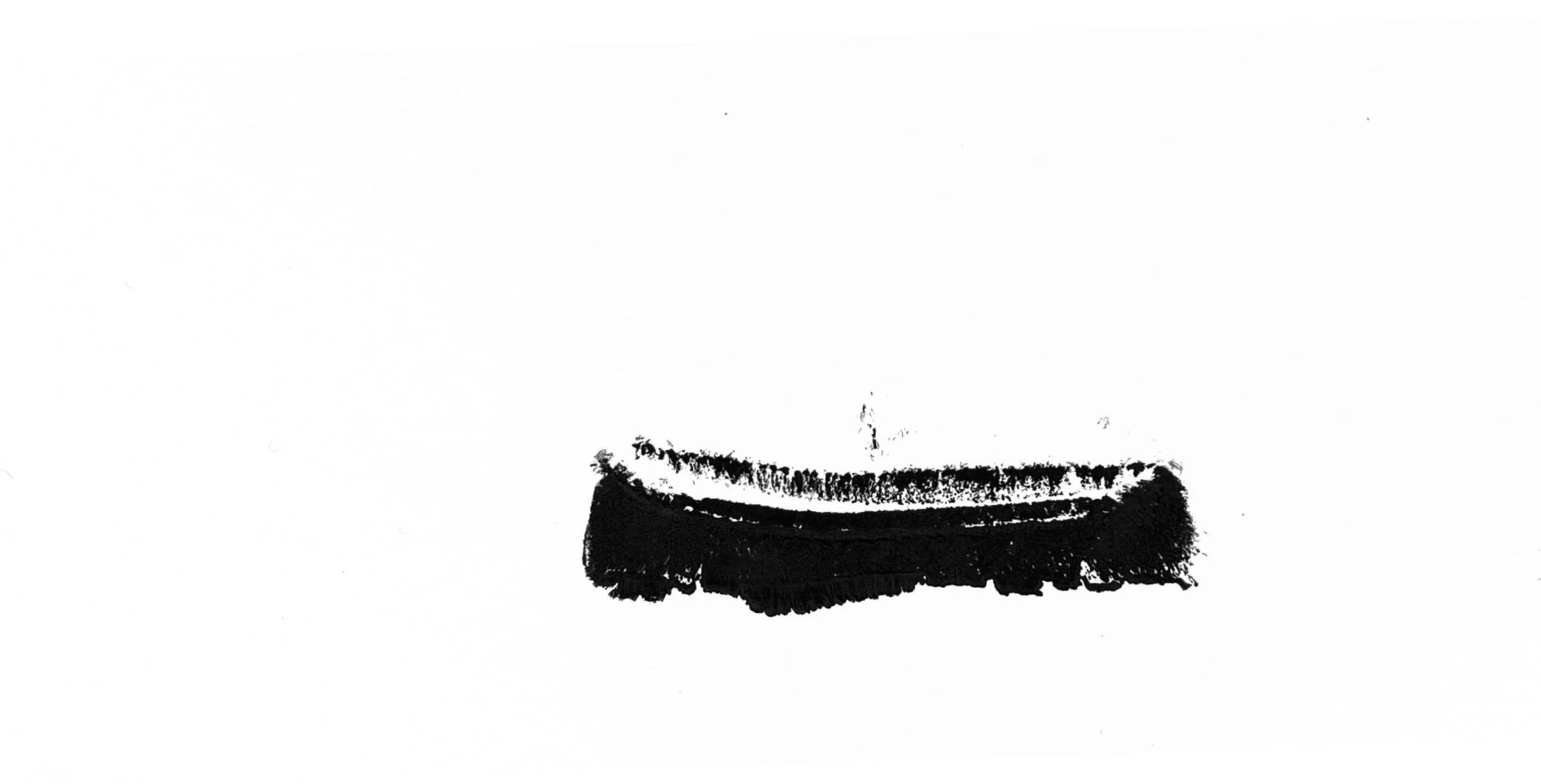
Trainer (stills), 2023. Relief prints from sliced trainer (sneaker).
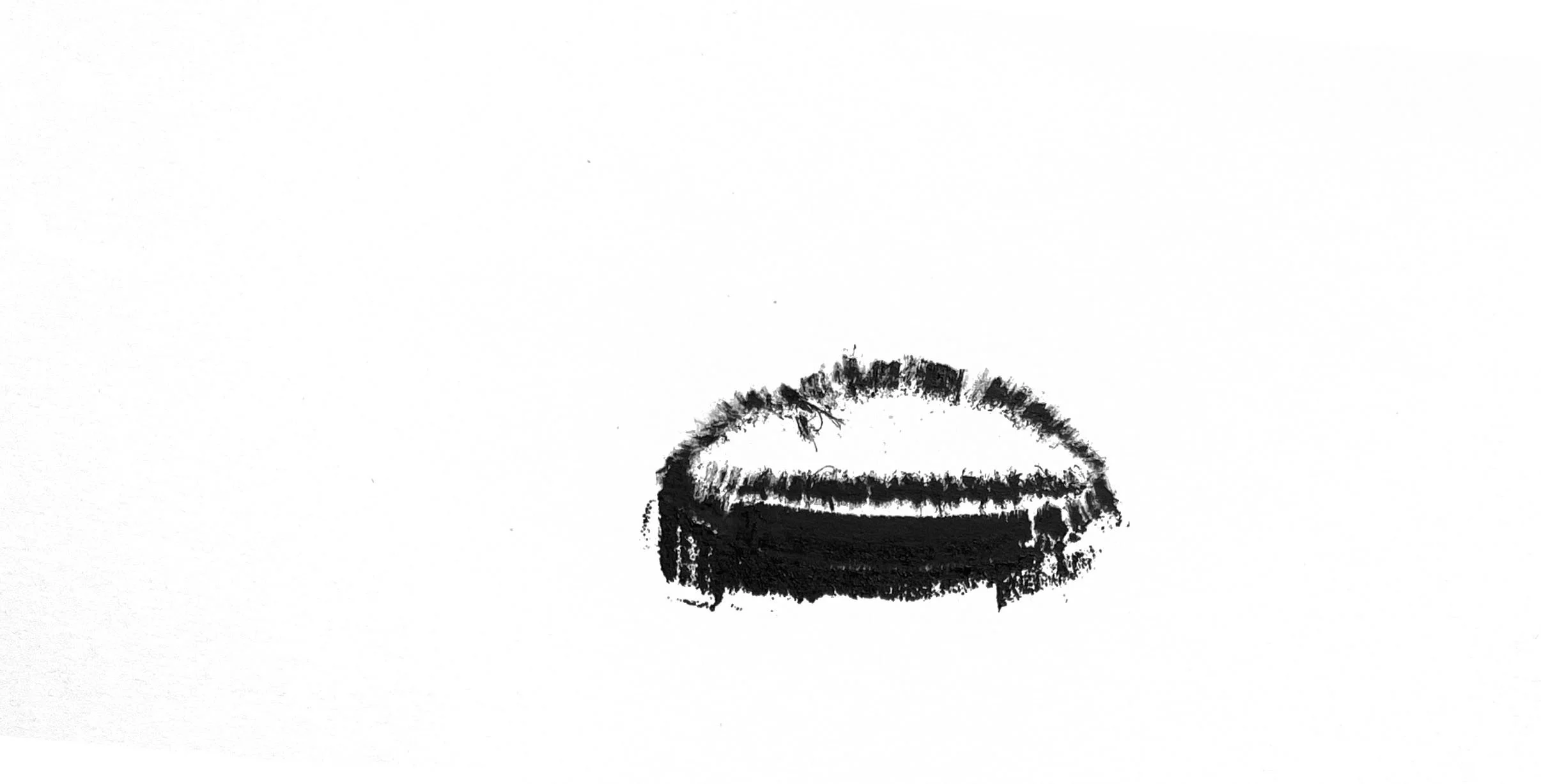
Trainer (stills), 2023. Relief prints from sliced trainer (sneaker).
My grandmother died in 2007; I had lived with her, on and off, for a decade. While I was in college and graduate school in the United States she wrote to me regularly on distinctive blue airmail paper that was tissue-thin and carefully covered on both sides with her characteristic handwriting. Coincidentally, it was the same colour as the wheel on a mechanical infinity toy that I discovered in her home as a child. In 2009 I was on the cusp of moving, again, and found myself questioning the value of continuing to carry the large file of her letters with me, as they described only the mundane elements of her life. Selecting the specific fragments for each wheel, I saw those ordinary activities anew. I made this series of monoprint etchings at Crown Point Press in San Francisco.
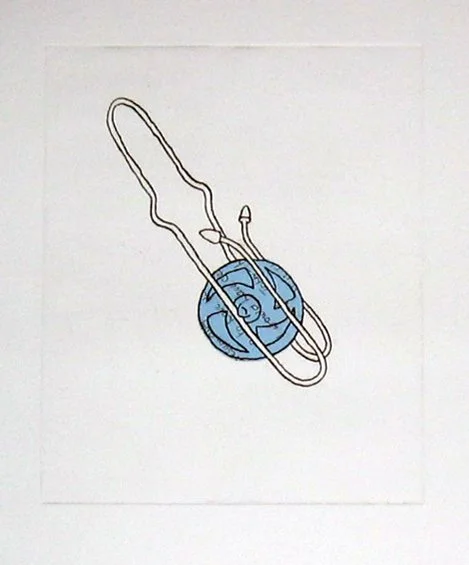
Wheelo (1), 2009. Soft-ground etching and chine collé using airmail letters.
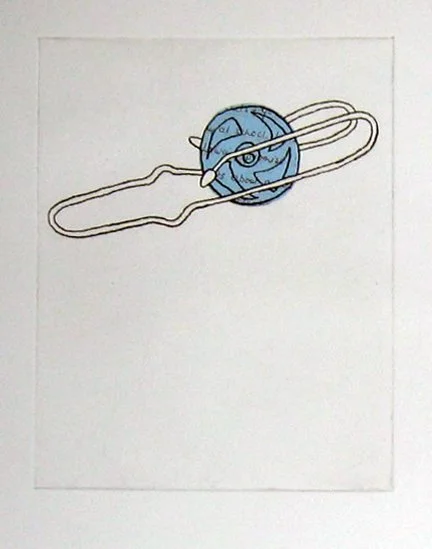
Wheelo (2), 2009. Soft-ground etching and chine collé using airmail letters.
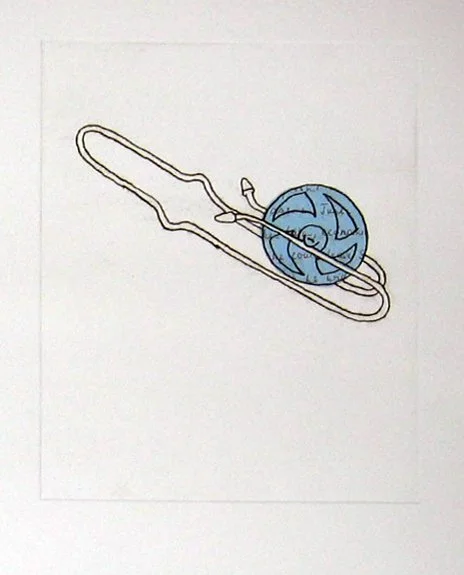
Wheelo (3), 2009. Soft-ground etching and chine collé using airmail letters.
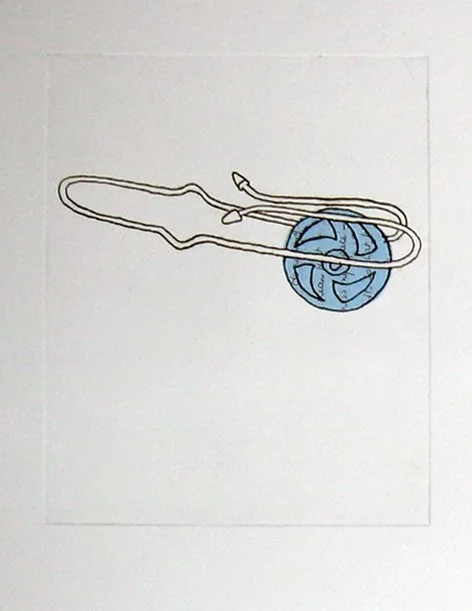
Wheelo (4), 2009. Soft-ground etching and chine collé using airmail letters.
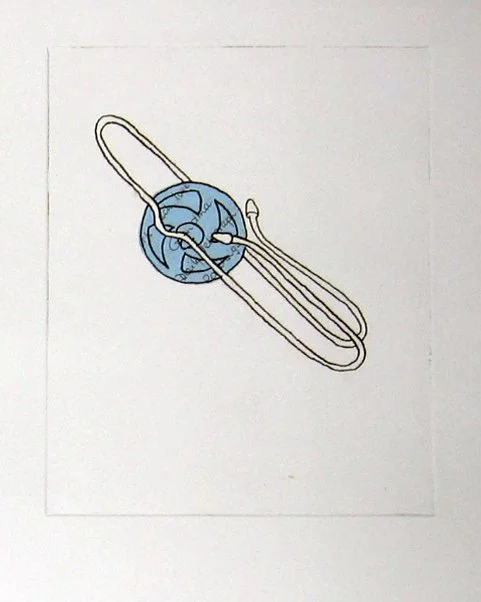
Wheelo (5), 2009. Soft-ground etching and chine collé using airmail letters.
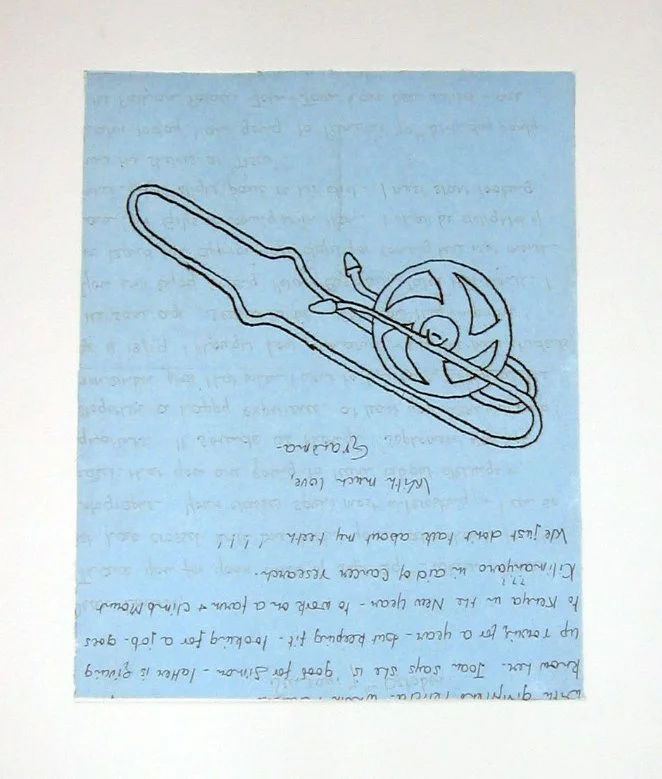
Letter, 2009. Soft-ground etching on airmail letter.
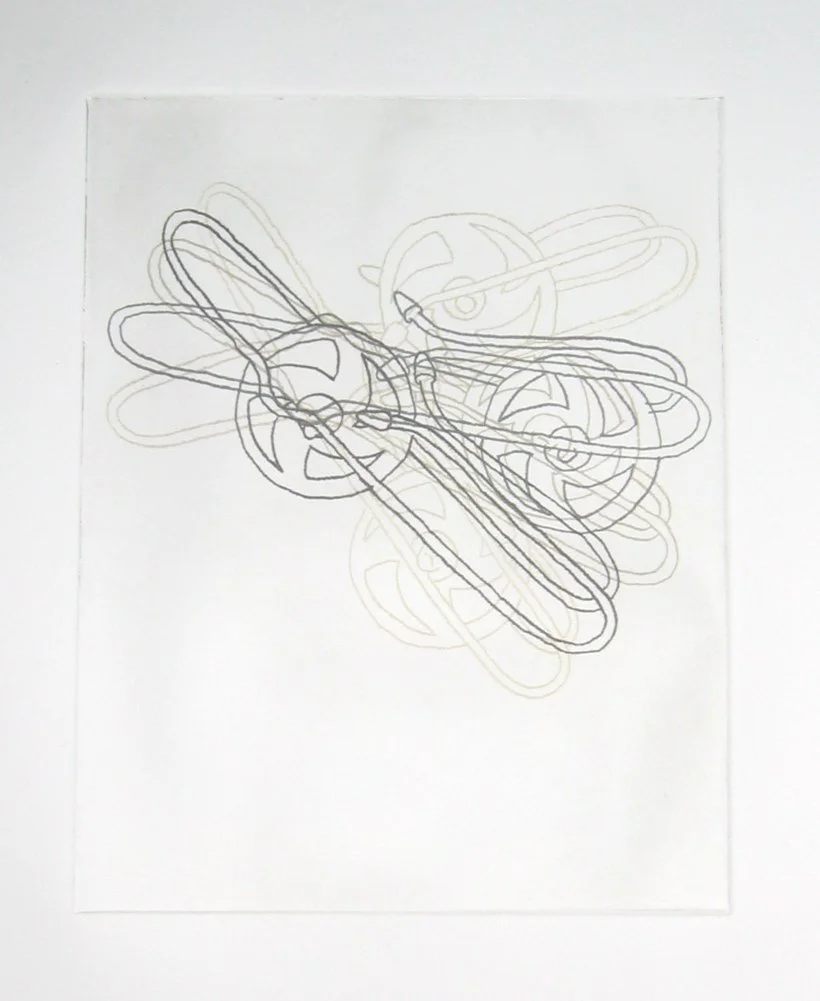
Wheelo (after Muybridge), 2009. Soft-ground etchings (ghost prints) on paper.
I have a small collection of nesting dolls, which typically involve developmentally iterative designs. The master printers at Crown Point Press warned me that I was creating areas too small to ink à la poupée. I was committed to the technique, which references Cassatt’s maternal imagery as well as punning on the nesting dolls themselves. Using a q-tip as my “doll,” I managed it — and used successive ghost impressions to reflect on generational influence, loss, and growth.
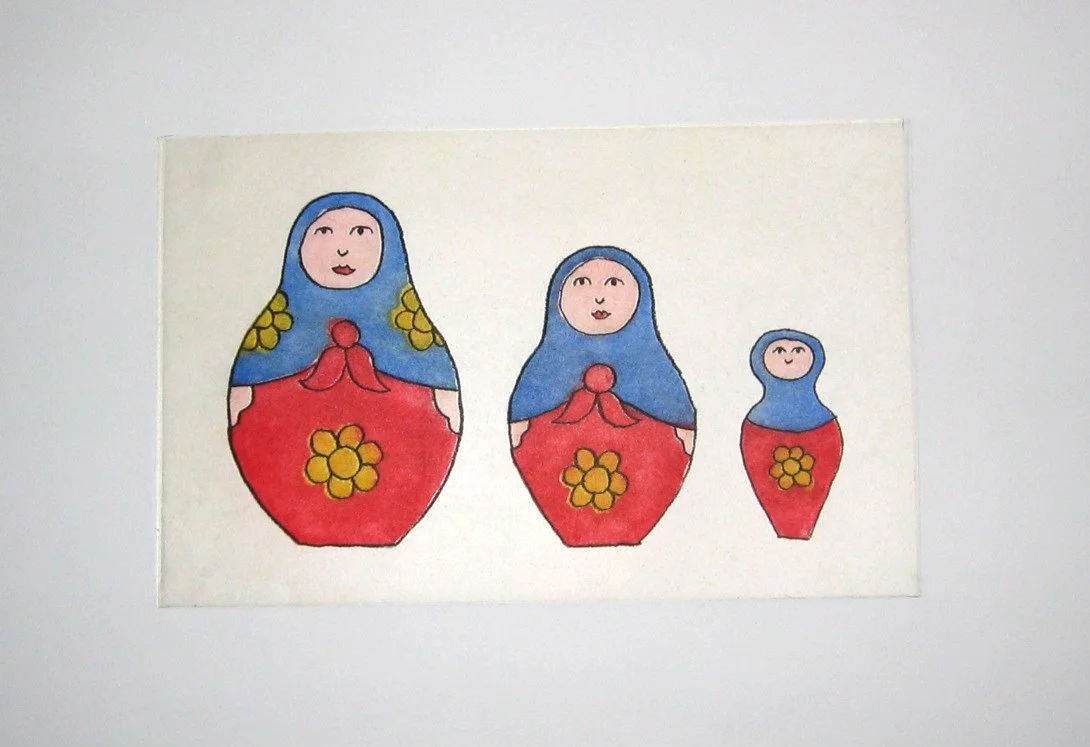
Nesting Dolls, 2009. Soft-ground etching and aquatint inked à la poupée on chine collé.
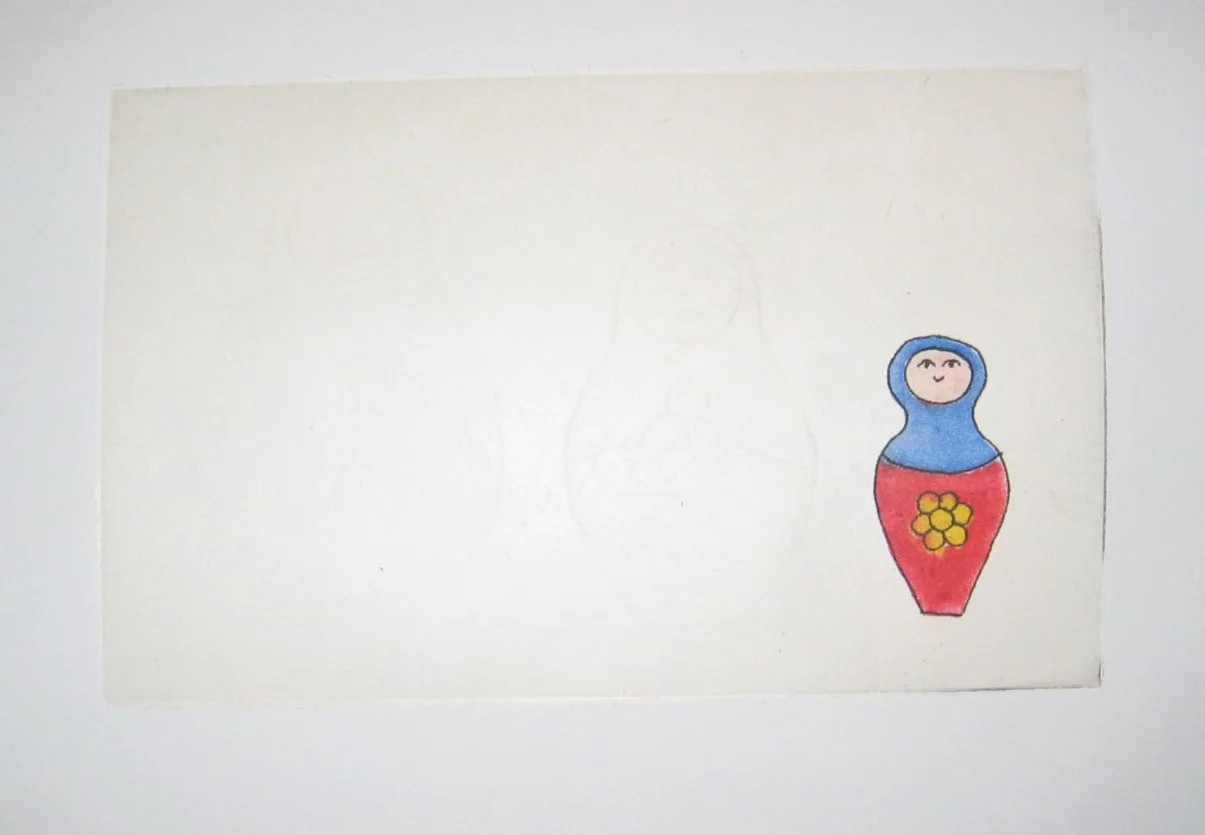
Nesting Dolls 1, 2009. Soft-ground etching and aquatint inked à la poupée on chine collé.
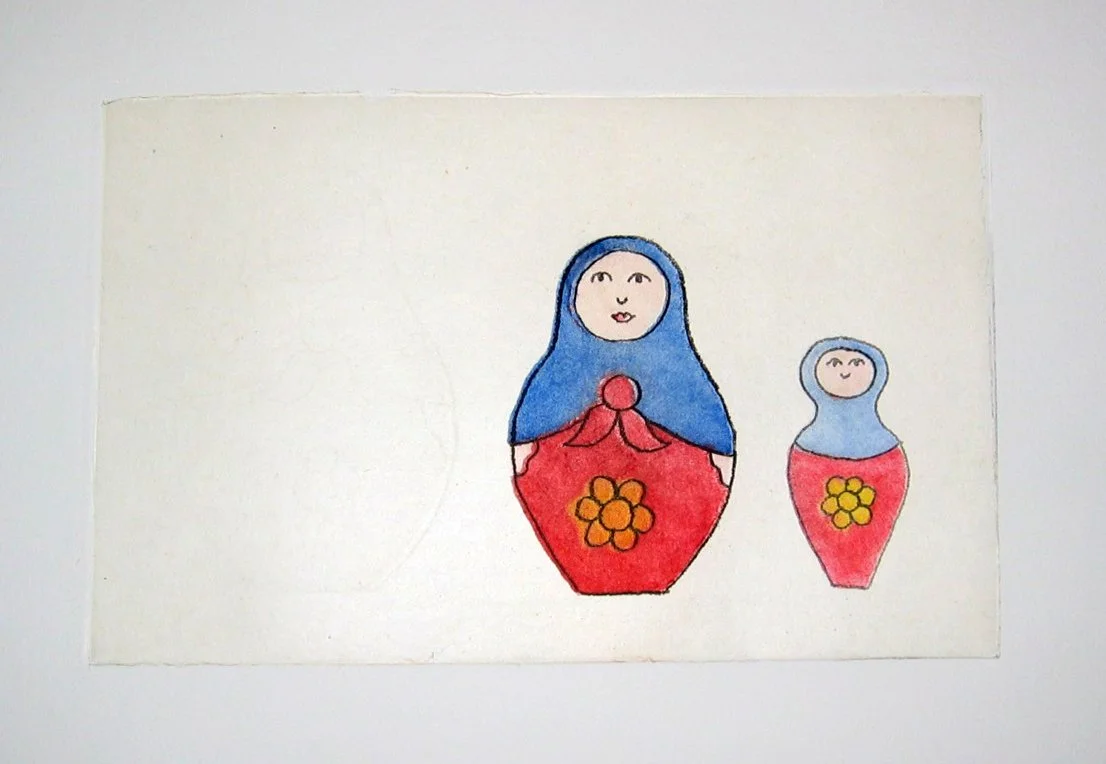
Nesting Dolls 2, 2009. Soft-ground etching and aquatint inked à la poupée on chine collé with ghost printing.
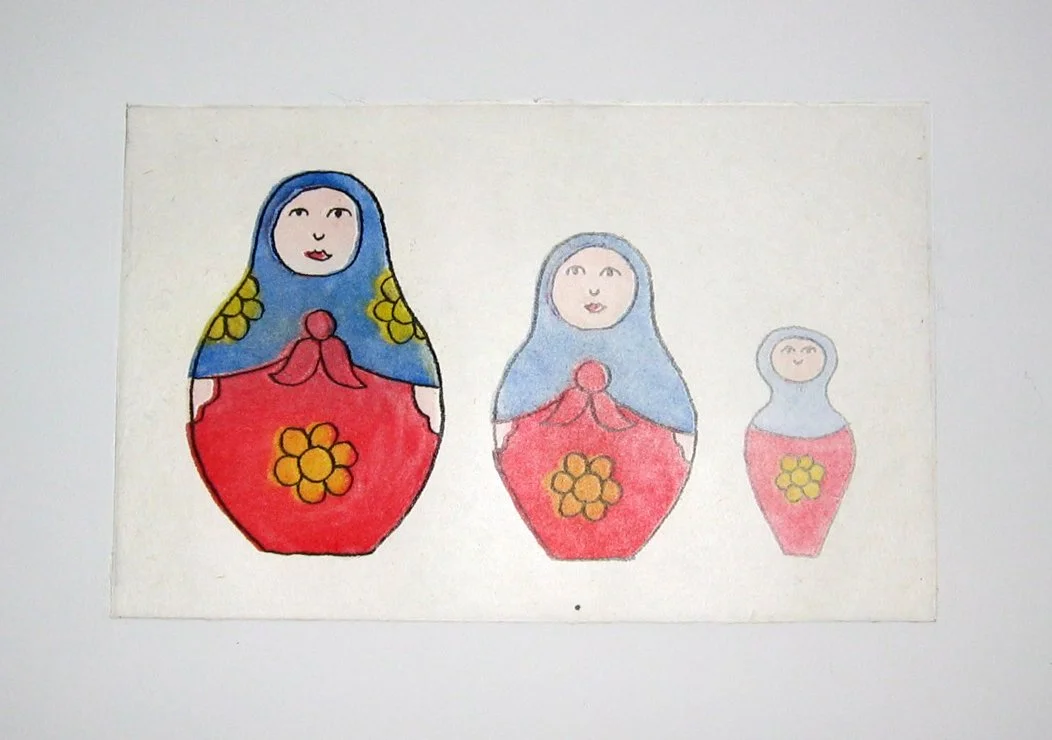
Nesting Dolls 3, 2009. Soft-ground etching and aquatint inked à la poupée on chine collé with ghost printing.